

When equipment needs to come into contact with chemical solutions, reduce friction, isolate sticky materials, or when manufacturing heat-resistant, insulating components, Teflon (PTFE) is often one of the materials considered. The material selection process can begin with the most concrete information at hand: a photo of a used part, the dimensions of a sheet of material, the specifications of a round bar, or the material designation listed on an equipment drawing.
This article summarizes the properties of PTFE, its applications in sheets, rods, tubes, and membranes, standard and specialty grades, processing and dimensional verification, comparisons with other fluoroplastics, as well as procedures for small-batch prototyping and bulk pricing inquiries. Chengsyin offers a comprehensive consultation service that integrates materials, parts, and engineering to help you organize your application, dimensions, and operating conditions into specifications that are ready for material selection, pricing, and validation.
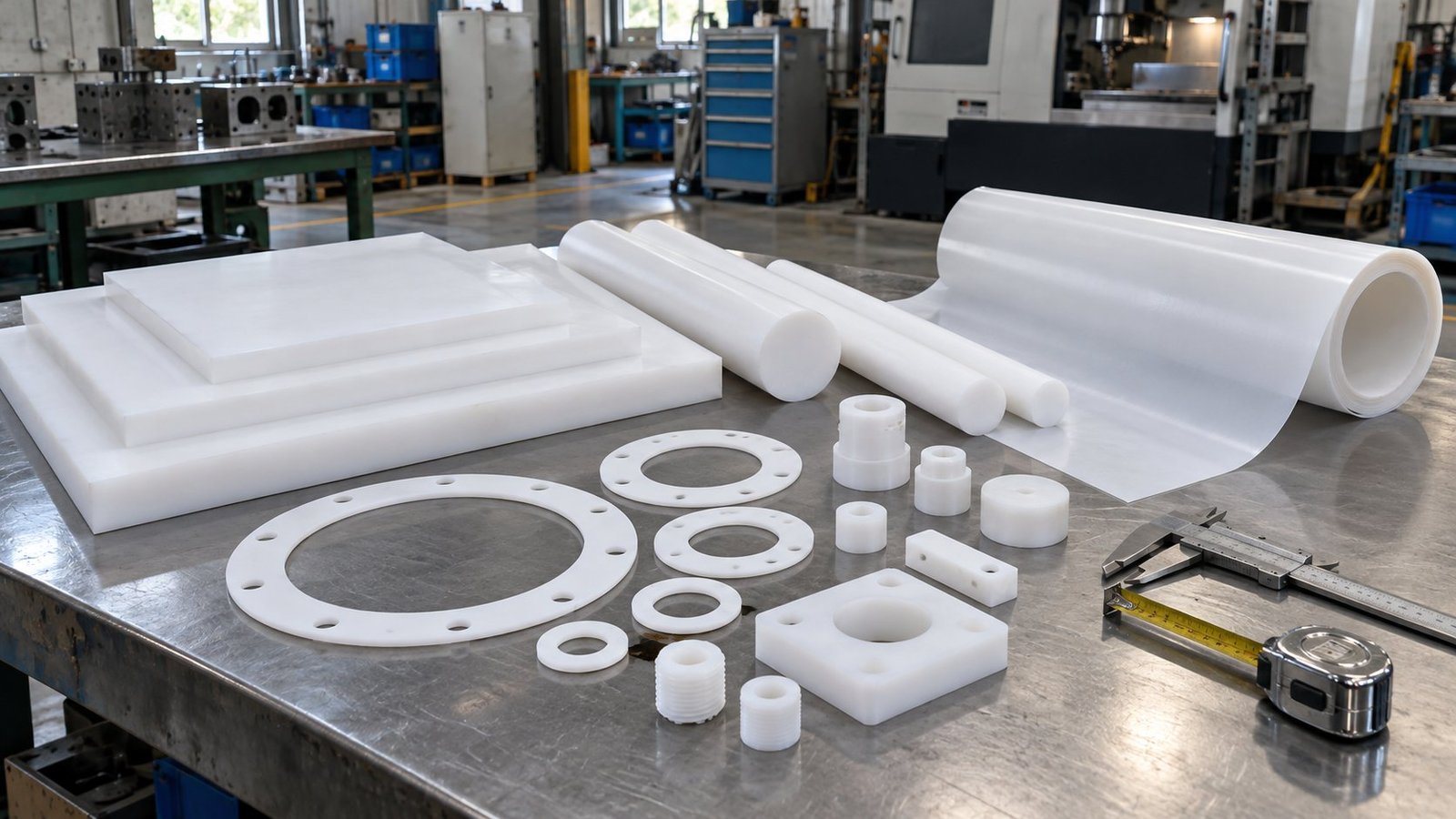
Chapter 1: What Is Teflon (PTFE)? Understanding Its Properties and Conditions of Use
1-1 PTFE is the material name; Teflon is the brand name.
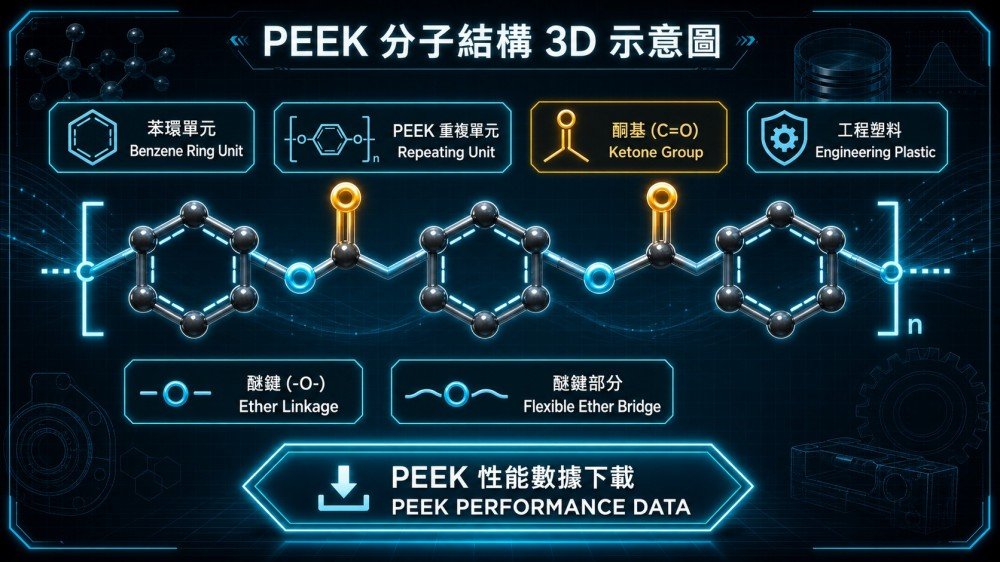
PTFE stands for polytetrafluoroethylene. In Taiwan, this type of material is commonly referred to as “Teflon”; Teflon™ is a brand owned by Chemours, which also produces other fluoroplastics such as PFA and FEP. Therefore, when requesting quotes or placing orders, retaining the designations PTFE, PFA, FEP, or the full grade designation on the drawings will ensure more accurate material verification.
For example, if the equipment documentation specifies “FEP rod,” retain “FEP” for the initial quote; if the documentation specifies “TFM sheet,” provide both the grade and the original specifications, and then discuss supply or alternative options.
1-2 Five characteristics corresponding to different parts' applications
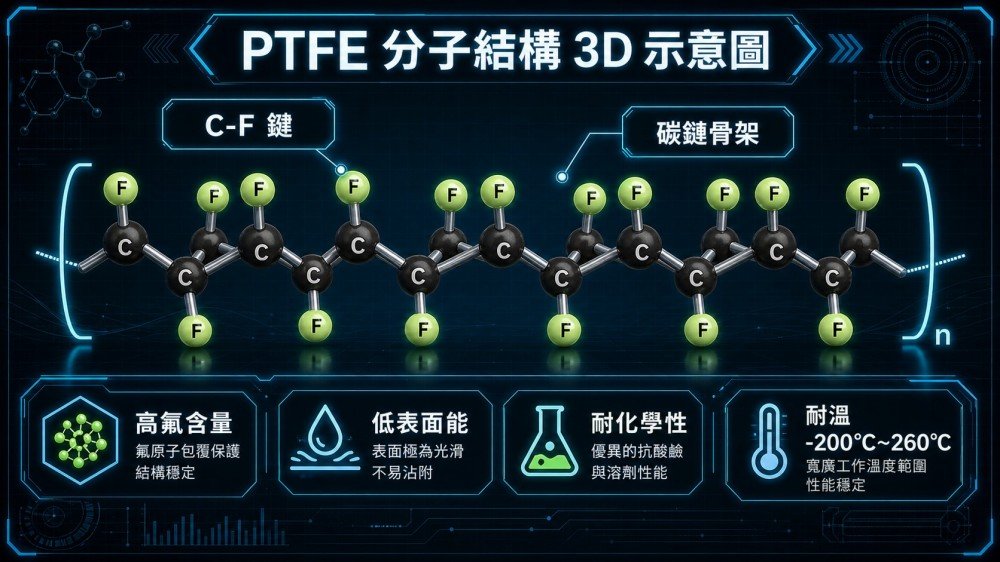
PTFE offers broad chemical resistance, low friction, low surface energy, and electrical insulation, among other properties, and is commonly used in parts exposed to chemicals, sliding components, and isolation parts. The actual material selection depends on factors such as medium concentration, temperature, pressure, load, and material grade.
| Material Properties | Assessable Uses | Terms Agreed Upon Together |
|---|---|---|
| Resistant to a variety of chemical media | Medicine-Resistant Gaskets, Valve Seats, and Lining Plates | Chemicals, Concentrations, Mixtures, and Cleaning Solutions |
| Wide temperature range | High-Temperature Insulation Spacers, Equipment Parts | Normal Temperature, Peak, Duration |
| Low friction | Bushings, Slides, and Guide Components | Load, Speed, Contact Materials, Lubrication |
| Low surface adhesion | Release film, material interface | Materials in Contact, Surface Requirements, Laminating Method |
| Electrical Insulation | Insulating Spacers, Electronic Fixtures | Voltage, Frequency, Thickness, and Filler Formulation |
The table lists recommended applications; material properties are confirmed based on the manufacturer's data and the actual grade.
1-3: Consider Temperature Ratings Alongside Component Functions
The typical upper limit for continuous use of PTFE is approximately 260°C, and its melting point is approximately 327°C. These two values represent different concepts: the former helps assess long-term use, while the latter describes the material’s melting transition; pressure-bearing, sealing, and dimensional requirements must still be verified on a case-by-case basis.
The lower limit for low temperatures is determined based on the grade, the finished product’s structure, and functional requirements. Manufacturer data may list very low cold resistance values for the material, while also noting that processed products may have different application conditions. When requesting a quote for low-temperature equipment, please specify the minimum temperature, temperature cycling requirements, and whether sealing or sliding is required.
PTFE is subject to creep when subjected to prolonged stress, and its dimensions also vary with temperature. For gaskets, thin-walled parts, and precision-fit components, the design should take into account the support method, clearances, locking mechanisms, and measurement conditions.
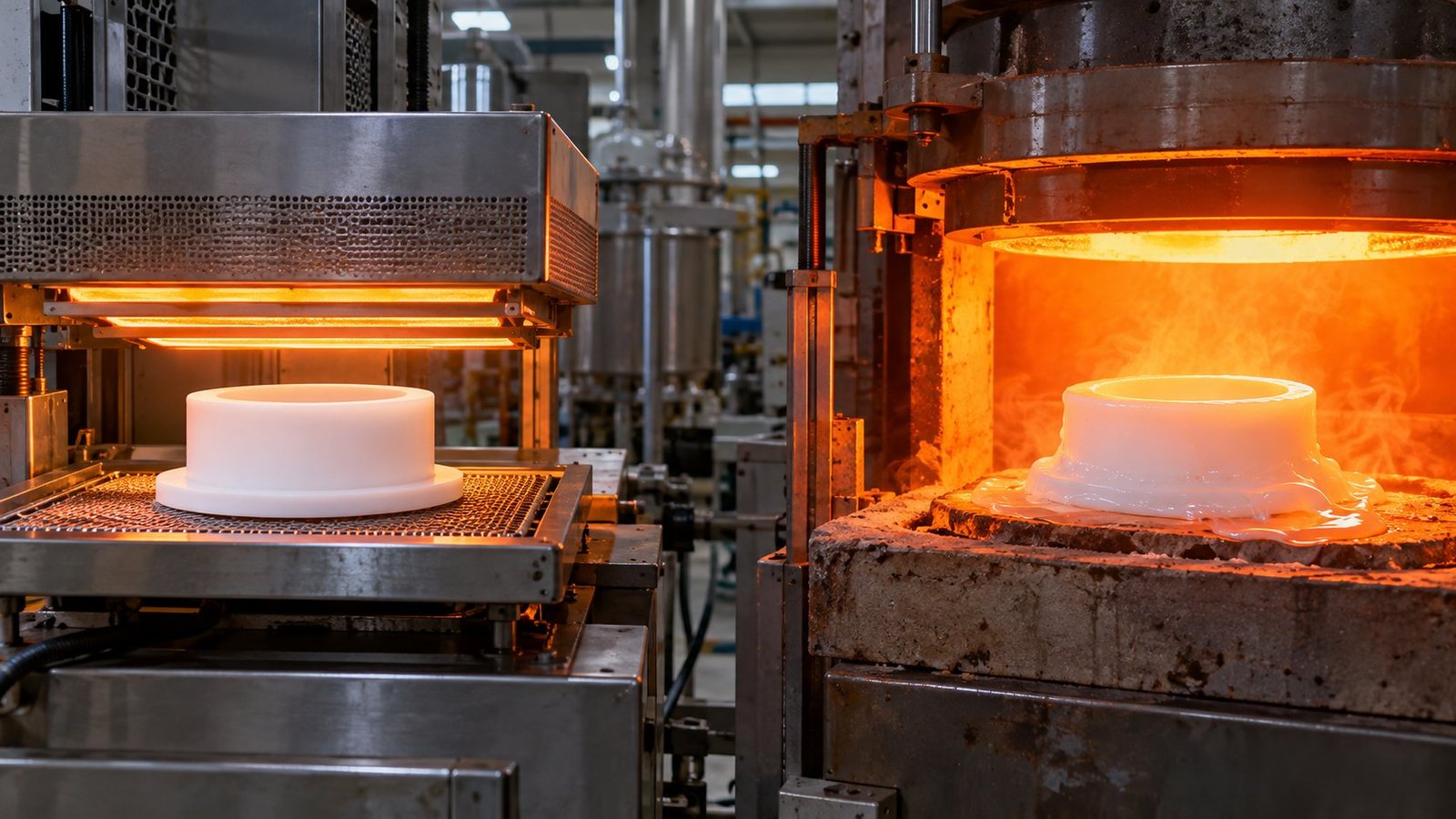
Chapter 2: How to Buy PTFE Sheets, Rods, Tubes, and Films? Organizing Sizes by Application
2-1 PTFE Sheets: Starting with the requirements for finished products such as gaskets, sliding plates, and insulating sheets
When flat gaskets, sliding liners, or insulating sheets are required, first determine the length, width, thickness, and quantity of the finished products, and then confirm whether to use pure material, filled material, or other grades.
For example, “PTFE sheet 60×120×5” can serve as a starting point for inquiries; the formal specifications can then be supplemented with units and the correct order:
"60 mm long × 120 mm wide × 5 mm thick; 2 pieces total; used as insulating pads for equipment."
If the original dimensions are in centimeters or other units, retaining the original markings and adding a note specifying the unit will allow the same set of data to be used for both cutting and quoting.
2-2 Single-Sided Coated Sheets and Large-Area Roll Stock: Clearly Specify All Laminating Conditions
If you need to bond PTFE to metal or other substrates, please inquire about surface-treated sheets or films. Surface treatment is used to improve bonding conditions; the actual adhesion performance depends on the adhesive, substrate, condition of the treated surface, and the manufacturing process.
Large-area liners can be supplied in a single order:
Effective width and total length of the finished product.
Requirements for thickness, sheet material, or roll material.
Single-sided or double-sided processing.
Types of Substrates and Surface Conditions.
Operating temperature, contact with chemical solutions, and the type of force applied.
Seam placement and test-fit dimensions.
At the time of delivery, reconfirm the preservation requirements and condition of the bonding surface, and verify the overall bonding performance through test adhesion, peeling, or under actual operating conditions.
2-3 PTFE Round Rods: Distinguishing Between Blanks for Machining and Precision Rods for Direct Use
Round bars can serve as blank material for machining rings, sleeves, valve seats, and other rotationally symmetric parts. When purchasing blank material, specify the diameter, length, number of pieces, and intended use for subsequent machining; when using the material directly, also include the finished dimensions and acceptance requirements.
For example, “Ø28×1 m” can be supplemented as follows:
"One PTFE round bar, 28 mm in diameter and 1,000 mm in length, for subsequent turning."
If the requirement is for a “Ø7.98 grinding rod,” list the diameter tolerance, effective length, roundness, straightness, and surface finish requirements, and then evaluate the machining and measurement methods.
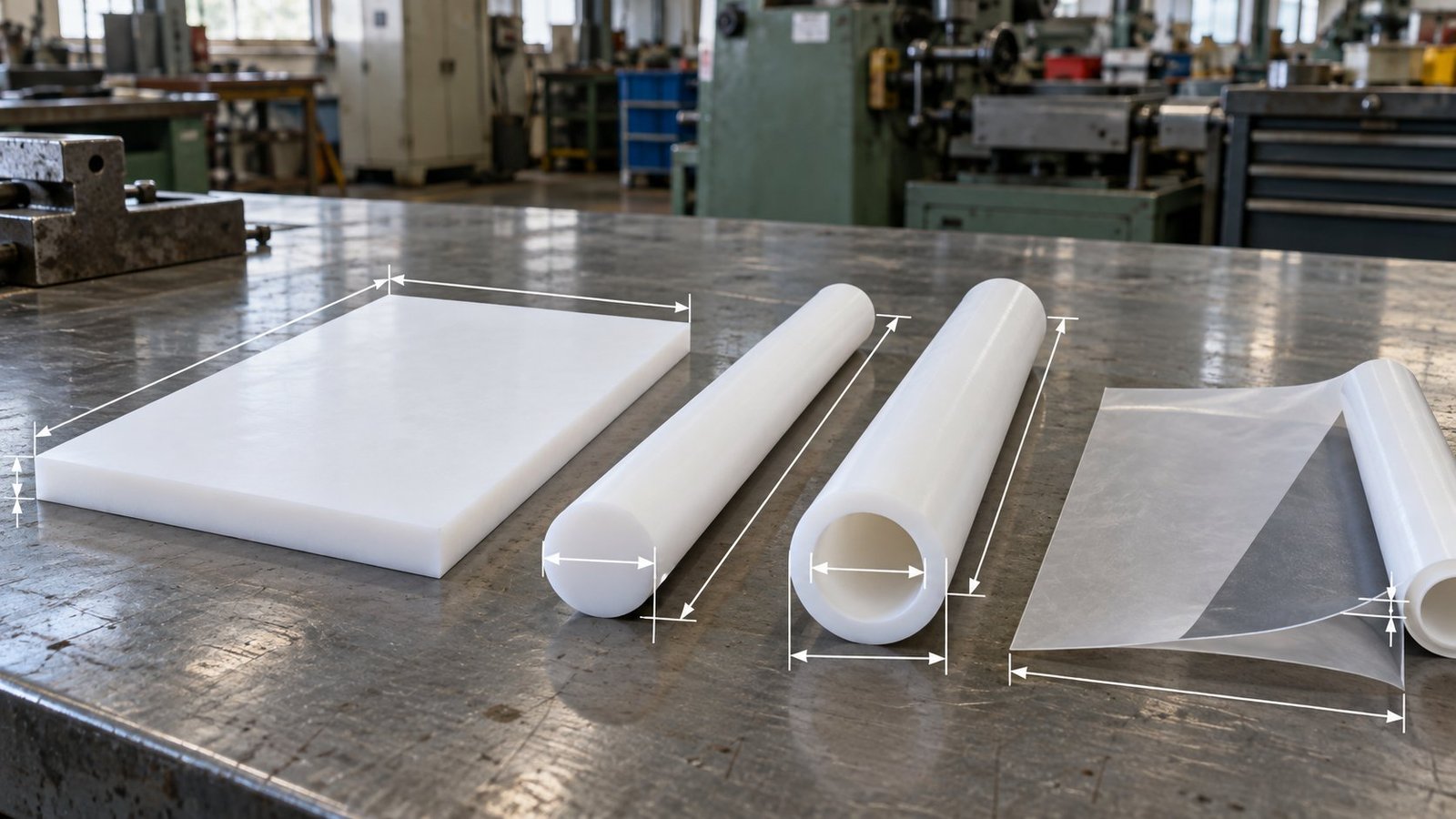
2-4 PTFE Tubing and Film: Please provide the wall thickness, width, length, and intended use.
When requesting a quote for tubing, provide the outer diameter, inner diameter, length, and quantity; if the tubing is intended for conveying fluids, also include the medium, temperature, pressure, fittings, and bending requirements. For film, provide the thickness, width, length, and number of sheets or rolls.
| Requirements | Specification Notation | Supplementary Information |
|---|---|---|
| Sheet Cutting | Length × Width × Thickness, with units | Number of pieces, intended use, and size requirements |
| Large-area workpieces | Thickness × Effective Width × Total Length | Surface to be treated, substrate, adhesive, joints |
| Round bar stock | Diameter × Length | Number of strands, material grade, intended use |
| Precision Round Bars | Finished Product Diameter × Effective Length | Tolerances, Surface Finish, Roundness, Straightness |
| Pipe | Outer Diameter × Inner Diameter × Length | Pressure, Temperature, Fittings |
| Film | Thickness × Width × Length | Sheet Material/Coil Material, Surface Treatment, Quantity |
When the film is labeled as 0.15t, 0.3t, or 0.5t, the request for quotation may directly specify the thickness as 0.15 mm, 0.3 mm, or 0.5 mm, and the units in the original document should be confirmed.
Chapter 3: How to Choose Between Pure PTFE, Filled PTFE, TFM, and e-PTFE?
3-1 Pure PTFE: Verify the material using the grade designation and documentation
Pure PTFE can serve as a starting point for evaluating parts intended for chemical contact, insulation, and low-friction applications. When purchasing, verify the material, grade, source, and required documentation to ensure that material identification is based on traceable data.
For food, cleaning, or special process applications, further verify the compliance data for that grade and the finished product, as well as the processing, cleaning, and usage conditions.
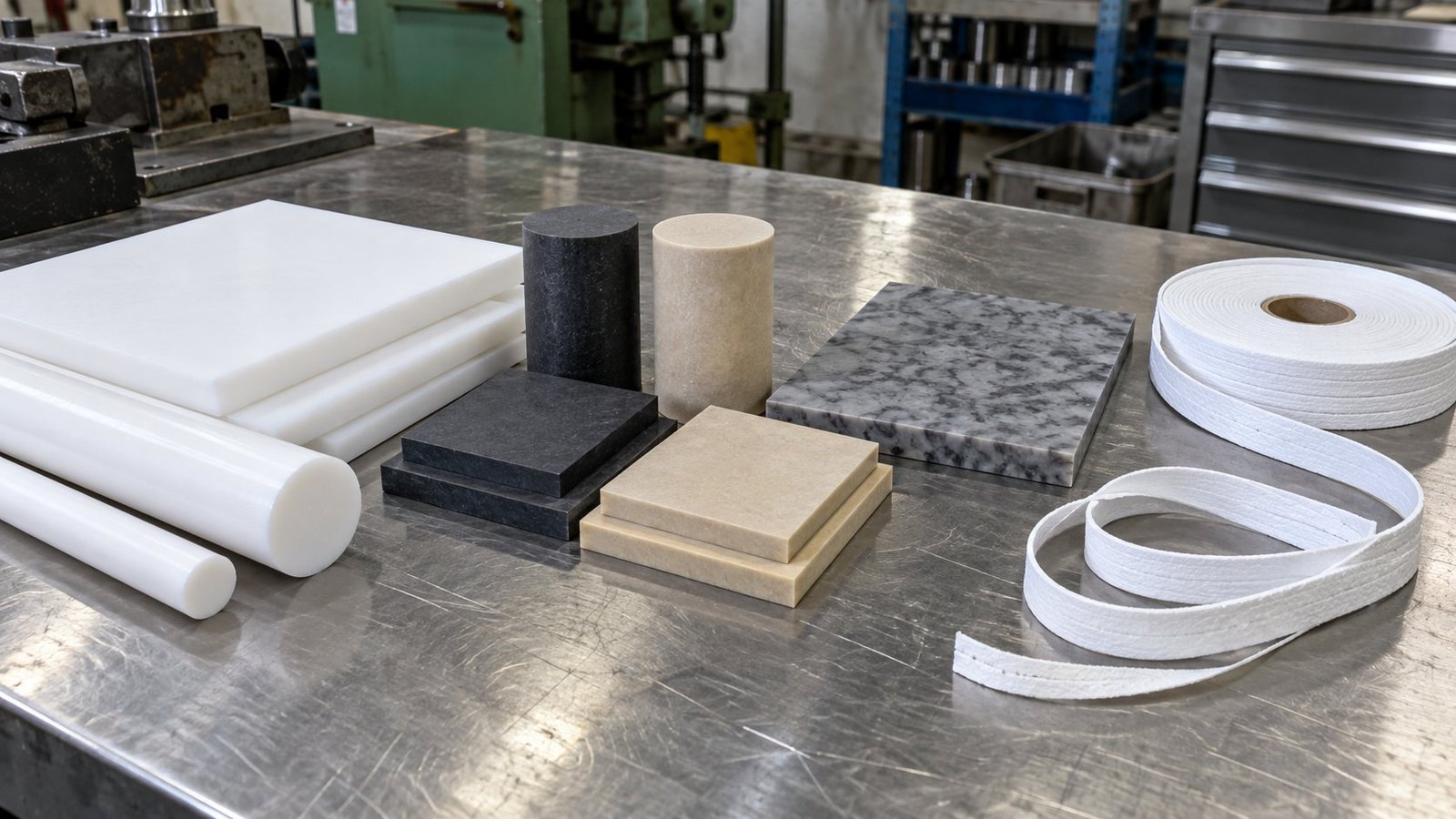
3-2 Filled PTFE: Comparing Wear Resistance and Load-Bearing Capacity with the Medium
Glass fiber, carbon, graphite, or other filler formulations can be used to adjust the wear resistance, creep behavior, thermal conductivity, and other properties of PTFE. When making a selection, it is also important to evaluate the effects of the fillers on chemical resistance, electrical insulation, and the mating surfaces.
| Material Orientation | Key Evaluation Points | Request for Quote Information |
|---|---|---|
| Pure PTFE | Chemical resistance, insulation, low friction | Media, Temperature, Load, Documents |
| Glass-Fiber-Reinforced PTFE | Wear Resistance, Pressure Resistance, and Dimensional Stability | Filling Ratio, Media, and Counter-Wear Materials |
| Carbon/Graphite-Filled PTFE | Sliding Wear, Thermal Conductivity, and Electrical Properties | Speed, Load, Lubrication, Electrical Requirements |
| Metal Powder-Filled PTFE | Load-bearing, Thermal Conductivity, and Wear | Complete formulation, corrosive environment, mating surface |
| Modified PTFE, such as TFM | Pores, Surface, and Other Grade Characteristics | Original Manufacturer's Grade, Physical Properties, and Applications |
| e-PTFE Flexible Sealing Material | Lamination and Compression Sealing Requirements | Flanges, Locking, Media, Temperature and Pressure |
Filled formulations and modified PTFE are available in a variety of grades. The table is provided for reference purposes only; the final material selection should be based on the specified material data.
3-3 TFM Board: Keep the full grade designation for comparison
TFM is a common brand name for modified PTFE. When purchasing, be sure to specify the full grade designation, such as when materials are specified for equipment, in original manufacturer documentation, or as required by the source. The properties of different modification grades should be verified separately to ensure that the sheets and machined parts are suitable for their intended applications.
If the application involves valve seats, parts in contact with pharmaceutical solutions, or precision fits, additional requirements regarding porosity, surface finish, permeability, and dimensions may be specified, supported by material data and validation results to inform the selection.
3-4 e-PTFE soft pads and filled wear-resistant rings, each with a verified path
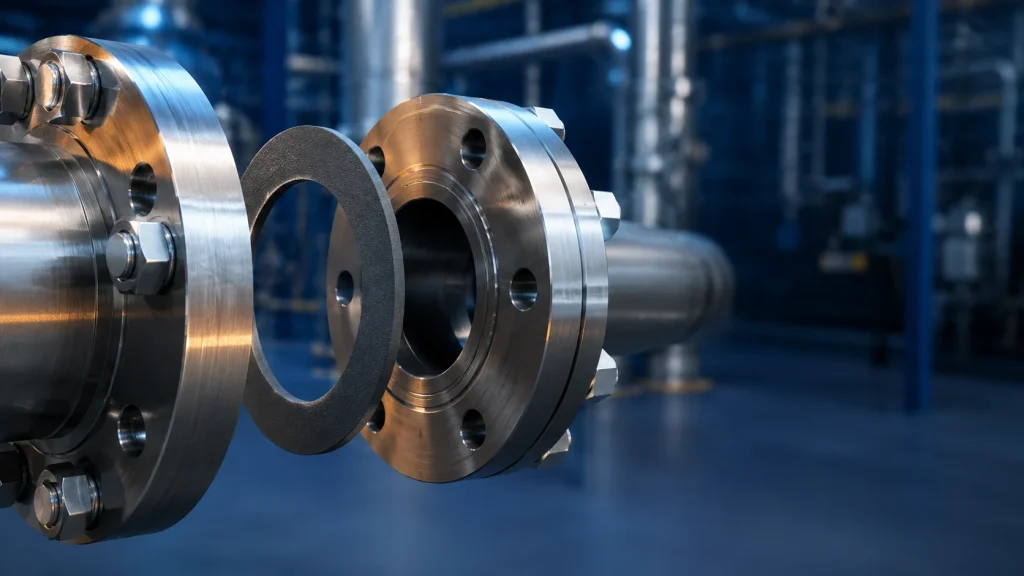
e-PTFE flexible sealing materials can be selected based on an assessment of flange sealing requirements, including sealing surface dimensions, surface condition, and bolt and clamping conditions, followed by verification of the specified product’s compression and temperature-pressure data.
When selecting a filled PTFE wear-resistant ring, the process begins with the operating conditions: the ring’s inner and outer diameters, width, opening configuration, load, speed, mating material, and lubrication method all influence the choice of formulation and processing methods. If an old ring is available, retaining the original material label and photographs of the wear patterns helps establish a baseline for comparison.
Chapter 4: How Are PTFE Gaskets and Machined Parts Made? From Photos to Manufacturing Specifications
4-1 First, check the outer diameter, inner diameter, thickness, and quantity of the gaskets
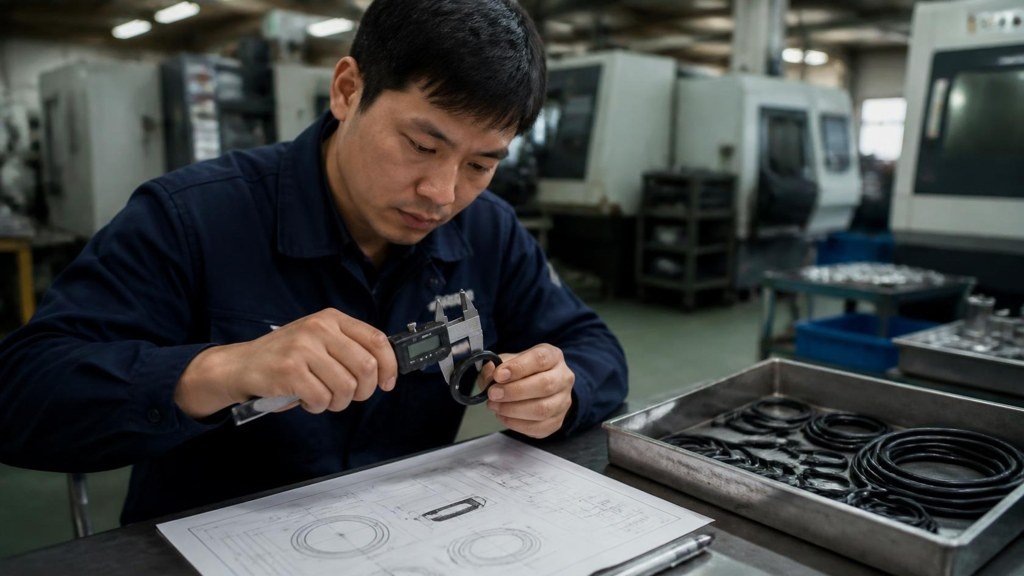
O-rings can be described as “OD (outer diameter) × ID (inner diameter) × thickness.” If there are hole locations, notches, special shapes, or orientation requirements, please include a drawing or hand-drawn dimensions.
Standard flanges specify applicable standards, nominal diameter, pressure ratings, sealing surfaces, and gasket types, allowing dimensions to be verified against the actual installation location.
| Gasket Types | Basic Information | Additional Items |
|---|---|---|
| O-ring | Outer Diameter × Inner Diameter × Thickness | Tolerances, Quantities, Materials |
| Perforated Gasket | Shape, Aperture Size, Aperture Spacing | Reference Points, Number of Holes, Installation Orientation |
| Standard Flange Gaskets | Standards, Nominal Diameter, Pressure Rating | Sealing surface, fully flat, or annular |
| Special Sealing Gaskets | Drawings or physical objects | Grooves, Compression Chambers, Operating Conditions |
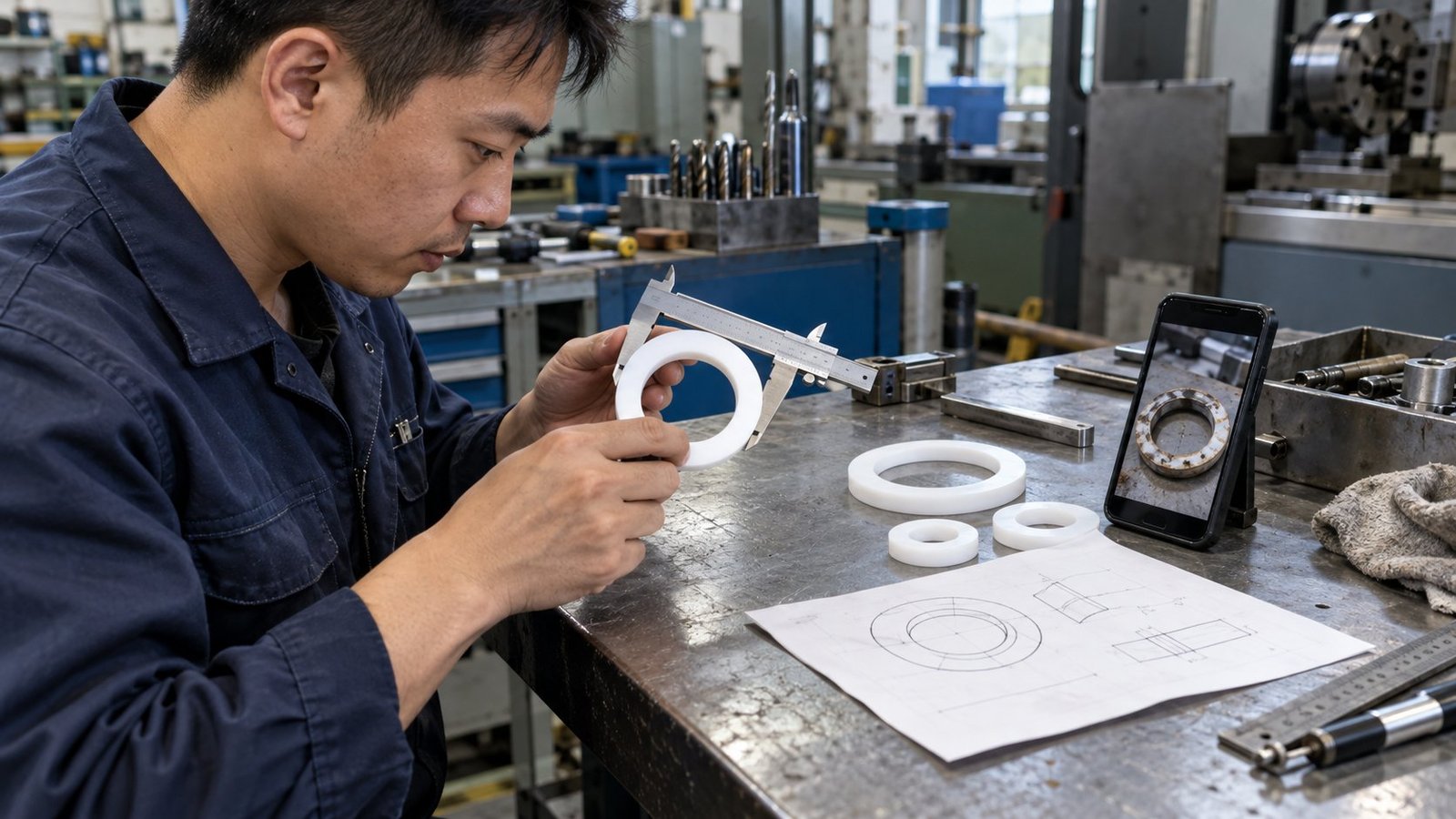
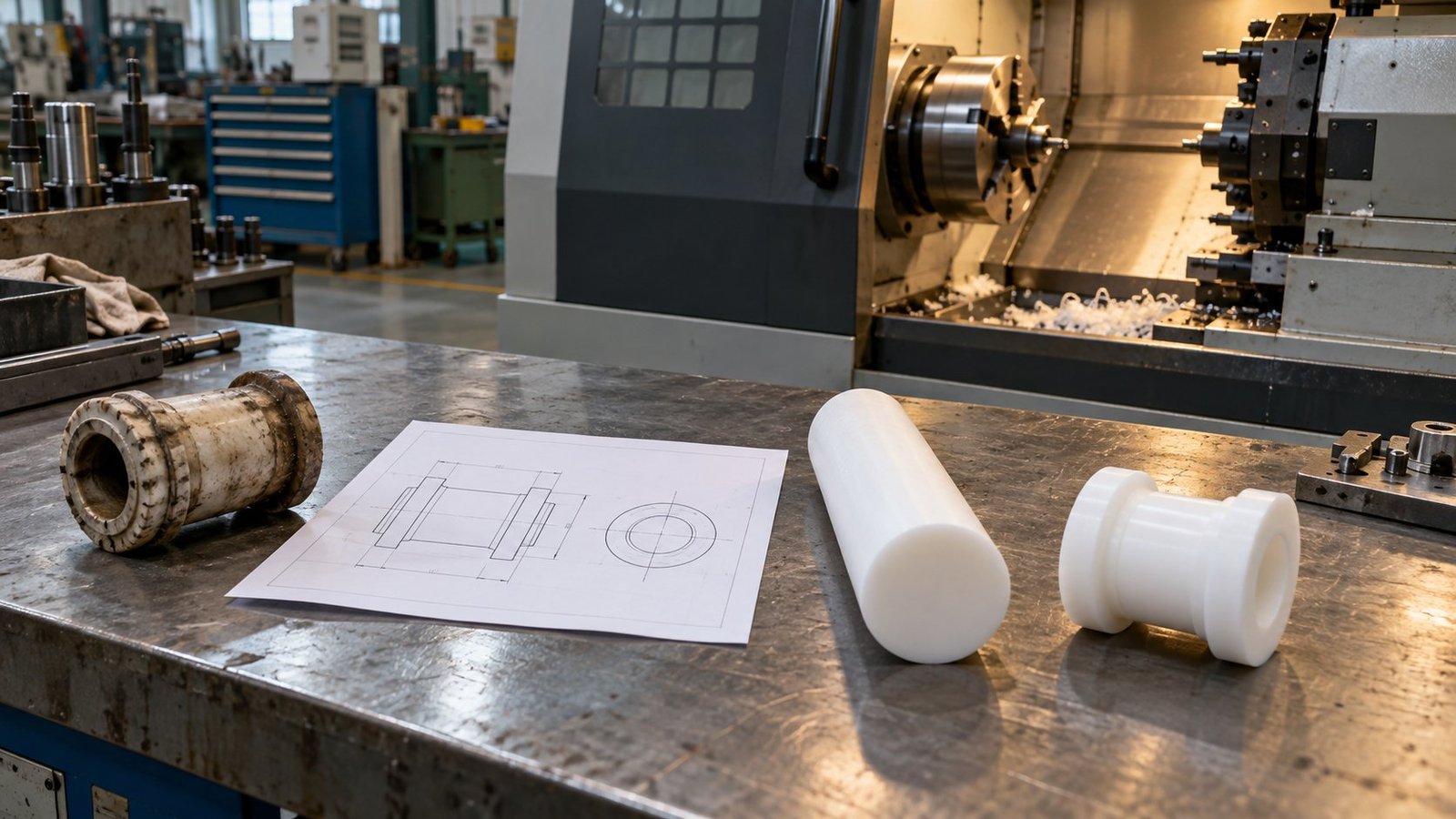
4-2 If you only have photos of the old parts, you can start by organizing them to make a preliminary assessment of your needs.
Photos can help identify shapes, installation locations, and machining directions. Start by taking photos of the front, side, close-ups of details, and the installation location, ensuring that the ruler and key dimensions are on the same plane.
A preliminary estimate can be based on photographs, approximate dimensions, information about materials, and quantities; formal production specifications are then established using drawings, physical measurements, or a dimension sheet agreed upon by both parties.
If the old part shows signs of wear or compression deformation, you can measure the mating part, shaft diameter, or groove at the same time to help restore the required finished dimensions.
4-3 Ø7.98 Grinding Rod: For Aligning Tolerances with Measurement Conditions
"Ø7.98" refers to the nominal diameter; the complete specifications also include dimensional tolerance limits, effective length, roundness, straightness, and surface finish requirements.
The thermal expansion, flexibility, and deformation under load of PTFE can affect processing and measurement; therefore, it is advisable to first agree on the measurement temperature, tools, measurement points, and placement conditions, and then confirm the acceptance criteria based on actual functional requirements.
When requesting a quote for precision parts, please include:
Bore or shaft dimensions.
Operating temperature and measurement temperature.
Effective length.
Critical Dimensions and Acceptance Limits.
Surface, Roundness, and Straightness Requirements.
4-4 Evaluation of the Same Gasket Model in Batches of 1, 500, and 3,000 Pieces
A single drawing can list quantities for pilot production, initial production, and mass production. The supply assessment is organized based on shape, thickness, nesting, processes, fixtures, inspection, and delivery requirements, allowing for a consistent comparison of specifications across different quantity levels.
During sample verification, record the dimensions, perform a test fit, and note the sealing or operating conditions, then apply the verification results to mass production.
Chapter 5: How Do PTFE, PFA, FEP, and PVDF Compare? Understanding Temperature Resistance and Material Applications
5-1 First, check the material name; then check the grade and operating conditions.
PTFE, PFA, FEP, and PVDF are all fluoroplastics, but they differ in chemical structure, molding methods, and properties. When comparing these materials, first consider the medium and temperature, then evaluate the load, shape, processing requirements, and documentation needs.
| Materials | Reference for Maximum Continuous Use | Processing and Applications | Material Selection Confirmation |
|---|---|---|---|
| PTFE | About 260°C | Plates, Bars, Shims, Turned Parts, and Other Machined Parts | Creeper, Load, Dimensions, and Formulation |
| PFA | About 260°C | Melt Processing, Tubing, Film, and Fluid Components | Grade, Purity, Forming, and Operating Conditions |
| FEP | Approximately 200°C; 205°C for specific grades | Melt Processing, Films, Coating, and Other Components | Specified Grade, Temperature, and Load |
| PVDF | Suitable for use at temperatures up to approximately 150°C in certain applications | Piping, Molded Parts, and Rigid Components | Stress, Media, and System-Wide Ratings |
For PTFE, refer to Zhongxing Chemical; for PFA and FEP, refer to Chemours; for PVDF, refer to Solvay/Syensqo. The figures in the table are for preliminary comparison only; official specifications are subject to confirmation based on the selected grade and part conditions.
The difference between 200°C and 205°C for 5-2 FEP lies in the data source.
The Chemours product description lists the maximum temperature for FEP as approximately 200°C; the FEP 100 technical data sheet, however, specifies a continuous operating temperature of 205°C. The latter has a specific definition of thermal aging, and its actual mechanical, chemical, and electrical applications still require verification.
Therefore, when inquiring about FEP rods, please provide the material grade, rod diameter, length, intended use, and maximum temperature so that suppliers and fabricators can base their evaluations on the same set of specifications.
5-3 Verify the temperature resistance of PVDF and the pipeline ratings separately
The Solef PVDF manufacturer's data sheet lists the maximum continuous operating temperature as approximately 150°C; the Syensqo FAQ provides further details on non-load-bearing applications, as well as the effects of system stress and chemical exposure.
When designing equipment piping, verify the pressure-temperature data for the pipes, fittings, valves, and connection methods. The temperature resistance of materials, the pressure-bearing capacity of the piping, and long-term service life are interrelated verification items.
5-4 Exports and Special Purposes: First, Organize the Required Documents
If a customer has requirements regarding food contact, cleanliness, specific raw materials, or PFAS-related documentation, please first provide the destination, intended use, customer specifications, and forms, and then confirm the documentation for materials and finished products item by item.
When requesting documentation, list the PTFE material name, requirements for processing aids or residues, test items, and regulatory declarations separately to ensure clear correspondence between the information.
Chapter 6: How to Estimate Teflon Prices and Lead Times? Categorizing Small Quantities, Samples, and Bulk Orders
6-1 When Requesting a Quote, First Consider the Materials, Dimensions, and Scope of Work
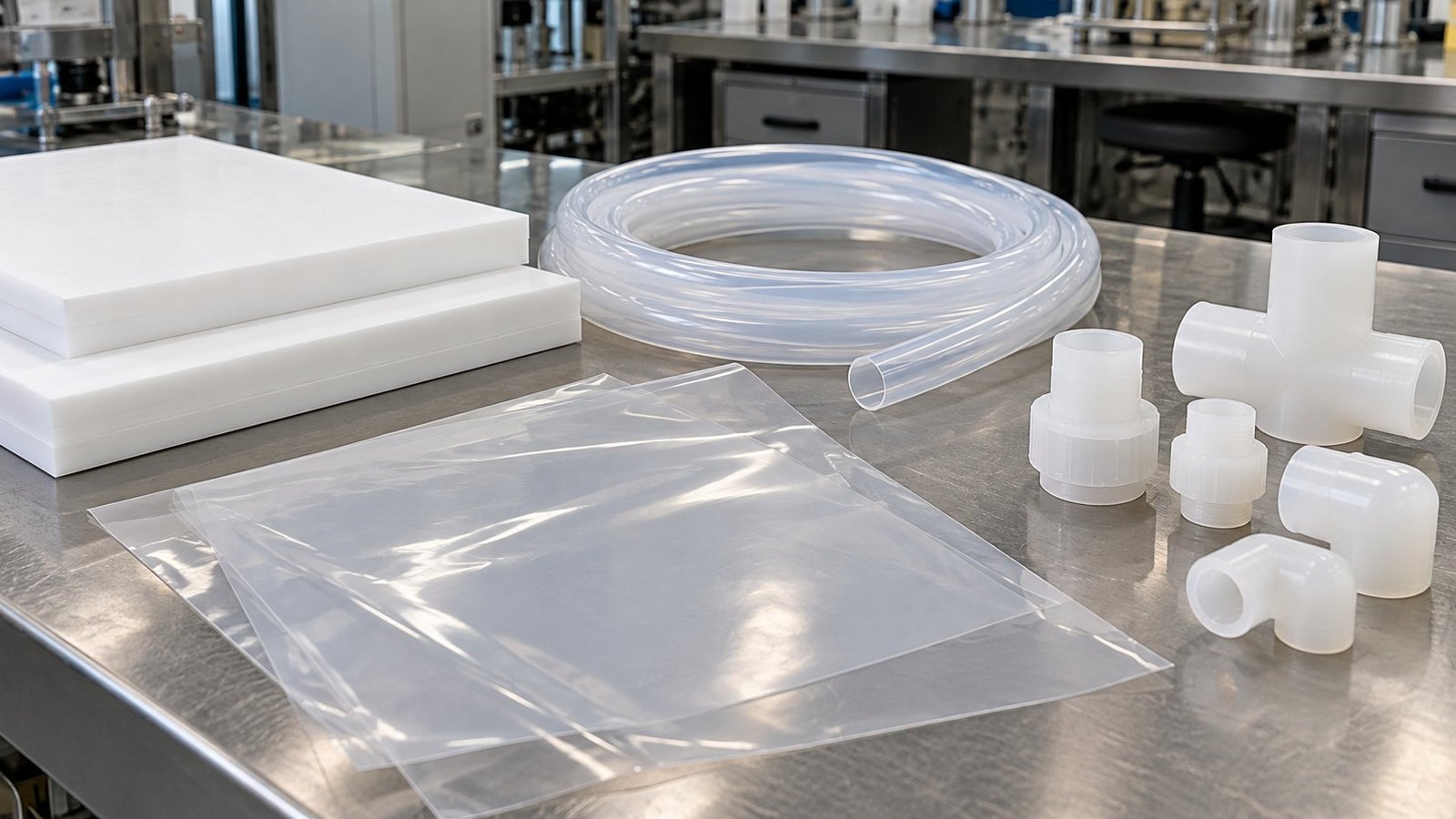
When requesting a quote for Teflon, first clarify which of the following three options you need: purchasing raw material, cutting to size, or manufacturing finished products based on drawings. Then provide details on quantity, tolerances, surface finish, inspection requirements, and documentation to help narrow down the quote range.
| Items in the Quote | Available Information |
|---|---|
| Materials | PTFE, filled formulations, TFM, e-PTFE, FEP, etc. |
| Dimensions | Plate width, length, and thickness; rod diameter and length; shim inner and outer diameters and thicknesses |
| Scope of Work | Raw materials, cutting, drilling, turning, grinding, surface finishing |
| Quantity | Order quantities such as 1 prototype, 500 units, 3,000 units, etc. |
| Quality | Critical Dimensions, Measurements, Appearance, Inspection Records |
| Delivery | Desired Delivery Date, Shipment in Installments, Packaging, and Documentation |
Quotes may be requested separately for different quantities using the same drawing version; when dimensions, materials, or acceptance requirements are adjusted, the drawing version should be updated accordingly.
6-2 Since there are only a small number of school experiments and R&D projects, first determine the minimum viable supply method.
For school experiments, research testing, and equipment prototyping, please specify the anticipated size of the small pieces, the number of pieces, or the total quantity. The method of supply will then be determined based on inventory, cutting requirements, raw materials, and processing conditions.
For example:
"We need three PTFE films, each 0.15 mm thick, 100 mm wide, and 200 mm long, for hot-press isolation testing; we also want to compare the 0.3 mm and 0.5 mm thicknesses."
This information allows small-volume orders to proceed directly to specification discussions and makes it easier to confirm alternative dimensions and documentation requirements.
6-3 First, determine the purpose of the sample; then, confirm the supply conditions.
Samples can be used to evaluate dimensions, fit, adhesion, demolding, wear resistance, or sealing performance. When making an inquiry, please specify the test items, dimensions, quantity, and operating conditions, and confirm whether ready-made samples, cut pieces, or prototypes are available.
Sample availability, costs, and delivery times will be confirmed based on actual conditions; after testing, the material grade, test conditions, and results will be retained so that the formal procurement process can use the same set of data.
6-4 Delivery dates are scheduled in conjunction with the confirmation of specifications and manufacturing conditions
When inquiring about delivery times, please provide your desired delivery date, your acceptance of partial shipments, and the date for sample approval. Chengxin will then confirm the schedule based on material availability, manufacturing processes, inspection requirements, and documentation needs.
When placing a formal order, compile the drawing version, materials, quantities, approved samples, documentation, and delivery method into a single record so that the same information is used for both production and acceptance.

Chapter 7: Teflon FAQ: 10 Questions About Purchasing and Use
Q1: Do "Teflon," "PTFE," and "Teflon" mean the same thing?
PTFE is the material name for polytetrafluoroethylene; “Teflon” is a common term used in Taiwan; Teflon™ is the brand name, which also encompasses products such as PFA and FEP. When purchasing, it is best to specify the material name and the full grade designation for clarity.
Q2: What is the temperature range for Teflon? Can it be used at low temperatures?
The typical upper limit for continuous use of PTFE is approximately 260°C, and its melting point is approximately 327°C; the lower temperature limit depends on the grade, finished product, and functional requirements. Specifying the minimum, normal, and maximum temperatures, duration, and load will help in establishing the actual operating conditions.
Q3: Is Teflon toxic? How should I choose food-grade equipment?
PTFE exhibits high chemical stability under appropriate operating conditions. For food equipment, select a grade with the appropriate food contact compliance documentation, and verify the final product, contact conditions, cleaning procedures, and operating temperatures. For heating processes, arrange temperature control and ventilation in accordance with the material specifications, and ensure food contact suitability is supported by the corresponding documentation.
Q4: Can PTFE sheets be bonded to metal?
Evaluate options based on surface-treated PTFE sheets or films, and select an adhesive suitable for the substrate and operating conditions. Provide details on the type of metal, bonding area, operating temperature, contact medium, and force application method, and conduct a test bond to verify the overall bonding performance.
Q5: What are the differences between the quotation details for the Ø28 round bar and the Ø7.98 grinding rod?
For Ø28 round bars used as blank material, please first specify the diameter, length, number of pieces, and material grade; for Ø7.98 bars used directly as finished products, please also specify the tolerances, effective length, surface finish, roundness, straightness, and measurement conditions. Precision requirements will be confirmed based on a functional fit and machining evaluation.
Q6: How do you distinguish between PTFE, e-PTFE, TFM, and filled PTFE?
These can be identified by their material type: pure PTFE, expanded flexible sealing material, modified PTFE, and filled formulations. When requesting a quote, please provide the complete material name, grade, or original specifications, and then select the appropriate option based on sealing, wear, medium, and dimensional requirements.
Q7: Can I request a quote for 1, 500, and 3,000 PTFE gaskets at the same time?
You can list different quantities of the same specification separately, including the outer diameter, inner diameter, thickness, material, and drawings. The machining, tooling, inspection, and delivery conditions for each quantity range should be confirmed separately to facilitate comparison between prototype and mass production options.
Q8: We only need a small piece of film for our school experiment. Can we request a sample?
Please first provide the thickness, width, length, and number of sheets, along with the intended use for the experiment, and specify the test items you wish to evaluate. Whether we can provide ready-made samples, cut pieces, or prototypes, as well as the supply quantity, cost, and delivery time, will be determined based on the actual materials and processing conditions.
Q9: Can you provide an estimate based only on photos of the used item?
You can start by compiling a preliminary assessment of your needs based on photos, approximate dimensions, quantities, and intended use. When it comes time for formal production, establish specifications using drawings, physical measurements, or verified dimension sheets; photos of matching components and their installation locations can also help clarify your requirements.
Q10: What information is needed to confirm the delivery date?
Please provide the materials, dimensions or drawings, quantities, processing and inspection requirements, and your desired delivery date. If you require a sample or delivery in batches, please include this information as well so we can confirm the feasibility of the arrangement based on material availability and production processes.
Conclusion: Use a checklist to organize Teflon requirements into discussable specifications
When selecting Teflon materials and parts, start by considering the application and dimensions, then gradually add details regarding the material, operating conditions, machining, and acceptance requirements. The more specific the information, the easier it will be to use a consistent set of specifications for material selection, pricing, prototyping, and formal procurement.
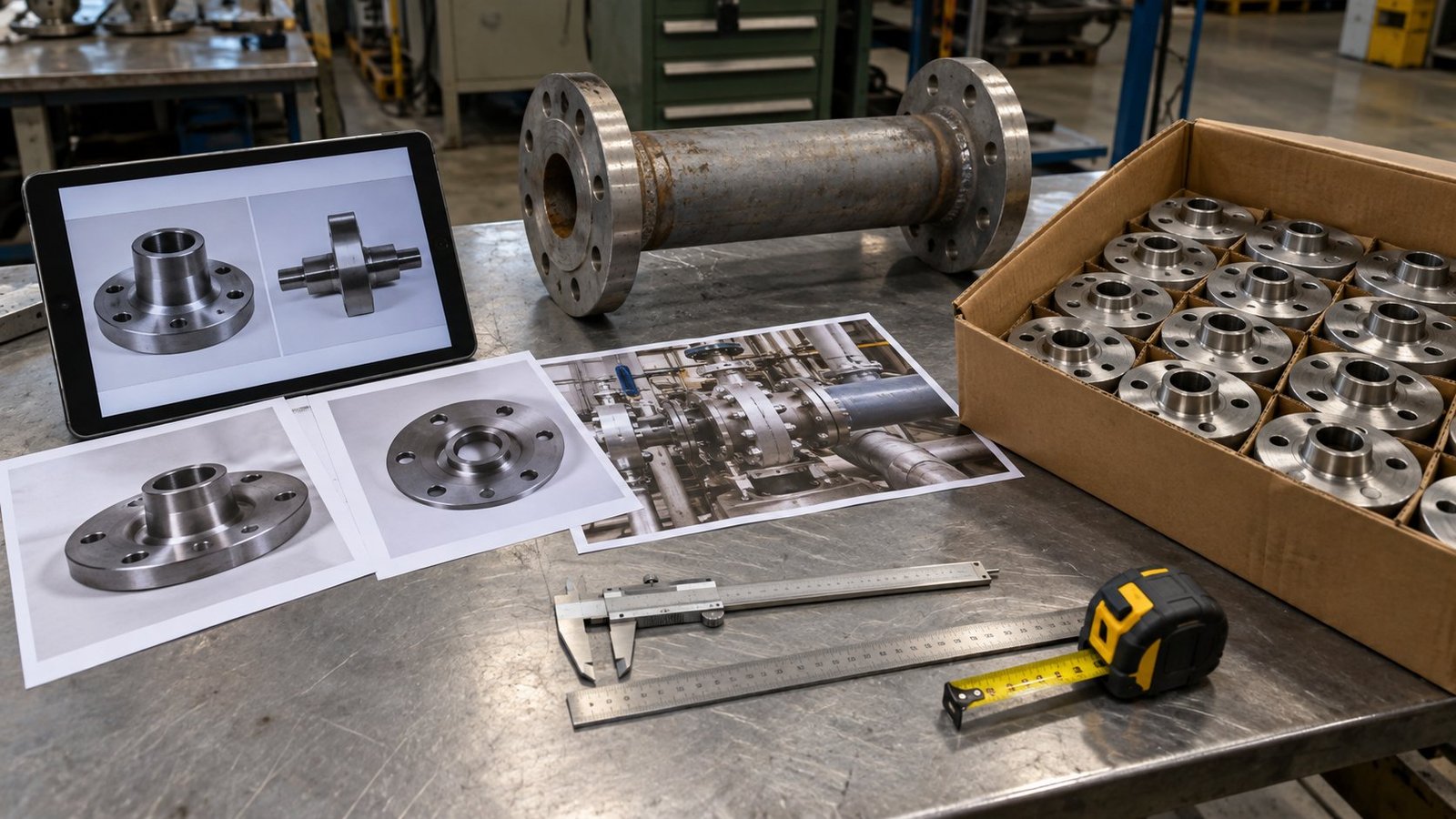
When preparing a request for quotation, you can use this checklist as a guide:
Material Name: PTFE, FEP, TFM, e-PTFE, or fully filled formulations.
Dimensions: Plate length, width, and thickness; bar diameter and length; inner and outer diameters of tubing; and inner and outer diameters and thickness of gaskets.
Photographs and drawings: Overall view of the part, close-ups, installation location, and mating components.
Operating Conditions: Medium, concentration, normal and peak temperatures, pressure, motion, and load.
Quantity and Delivery Schedule: Pilot production quantity, production run, desired delivery date, and requirements for split shipments.
Acceptance Documentation: Critical Dimensions, Tolerances, Inspection, and Compliance Data.
Chengsyin takes an integrated approach to materials, components, and engineering to help you organize your requirements for sheet metal, round bars, films, gaskets, and custom parts into clear specifications, ensuring that material selection, processing confirmation, and equipment usage all follow a single workflow.
Verification of Technical Information Sources
Zhongxing Huateng : PTFE has a continuous operating temperature of approximately 260°C, a melting point of approximately 327°C, and variations in low-temperature performance and processed products.
Chemours “Teflon™ PFA Properties Bulletin”: Data on the continuous service temperature of PFA film.
Chemours “Teflon™ FEP 100 Product Information”: Continuous operating temperature of 205°C, definition of thermal aging, and application validation conditions.
Chemours : Overview of FEP products and brand introduction, with a maximum operating temperature of approximately 200°C.
Solvay, “Solef® PVDF Typical Properties,” and Syensqo, “Solef® PVDF FAQ”: up to approximately 150°C, as well as load, stress, and chemical exposure conditions.
Classification Data for Filled PTFE and Modified PTFE: Used to understand material orientation; for actual production, verify the physical properties, source, and supply documentation of the specified grade from the original manufacturer.
The temperatures and performance data in this document are provided for material selection purposes. Actual material, component, and equipment specifications shall be confirmed based on the selected grade, supply documents, drawings, and operating conditions.