

FLANGE GASKET / STATIC SEALING

To ensure the flange gasket provides a tight seal,
Better Scheduling for Repairs

Please send us photos of the old gaskets and flanges, along with their dimensions and operating conditions, so we can work together to confirm the material, sealing surfaces, and installation requirements, and finalize the specifications for the next steps.

Material Selection · Dimension Confirmation · Flange Face Matching · Installation Requirements

CHALLENGES FACED

If you're looking for flange gaskets,
Have you encountered any of the following issues?

I just replaced the gasket—why is the joint leaking again?

Given that the size and material are the same, why is the service life shorter this time?

The specifications all seem correct, so why doesn't it seal properly after I lock it?

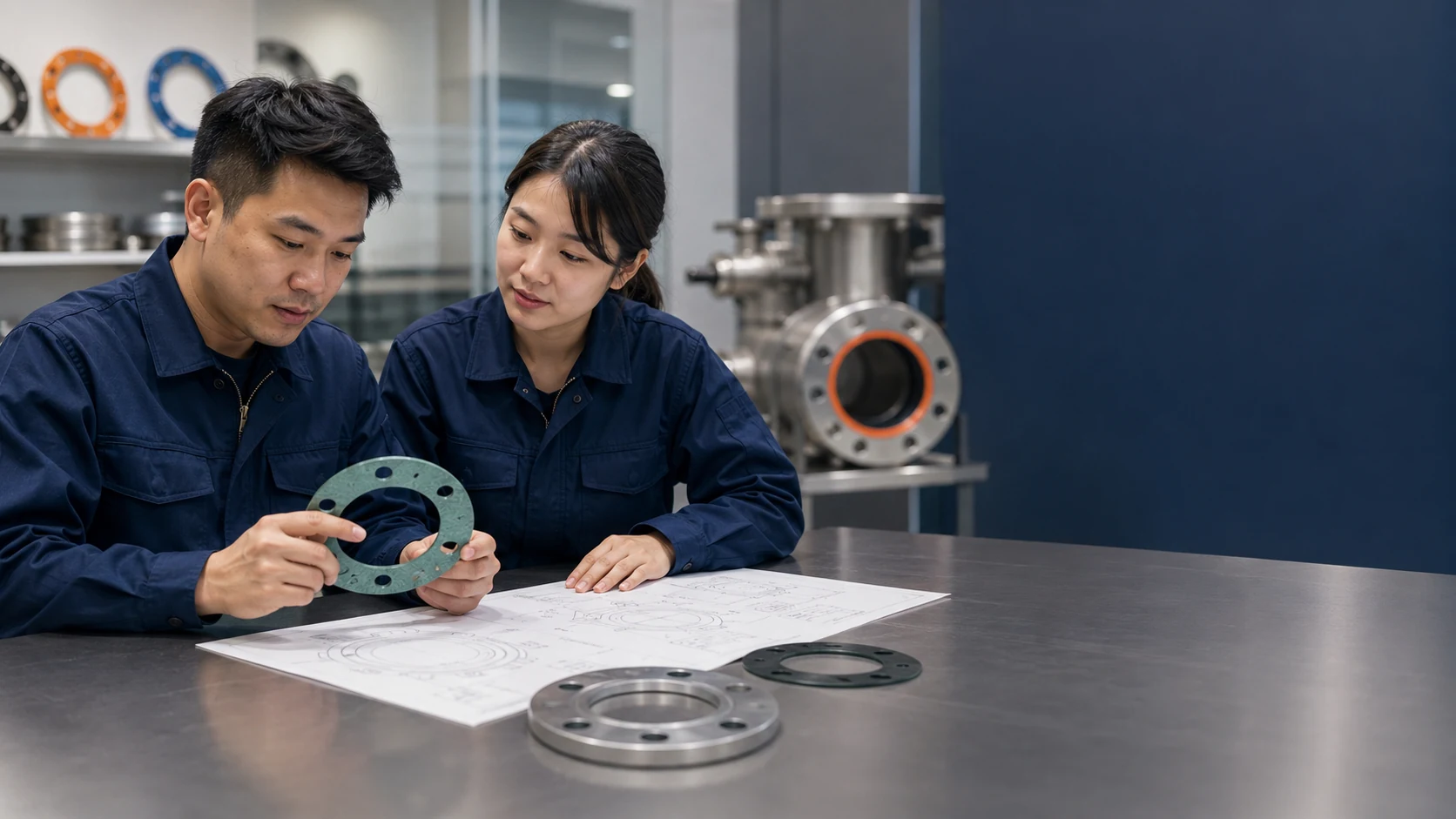
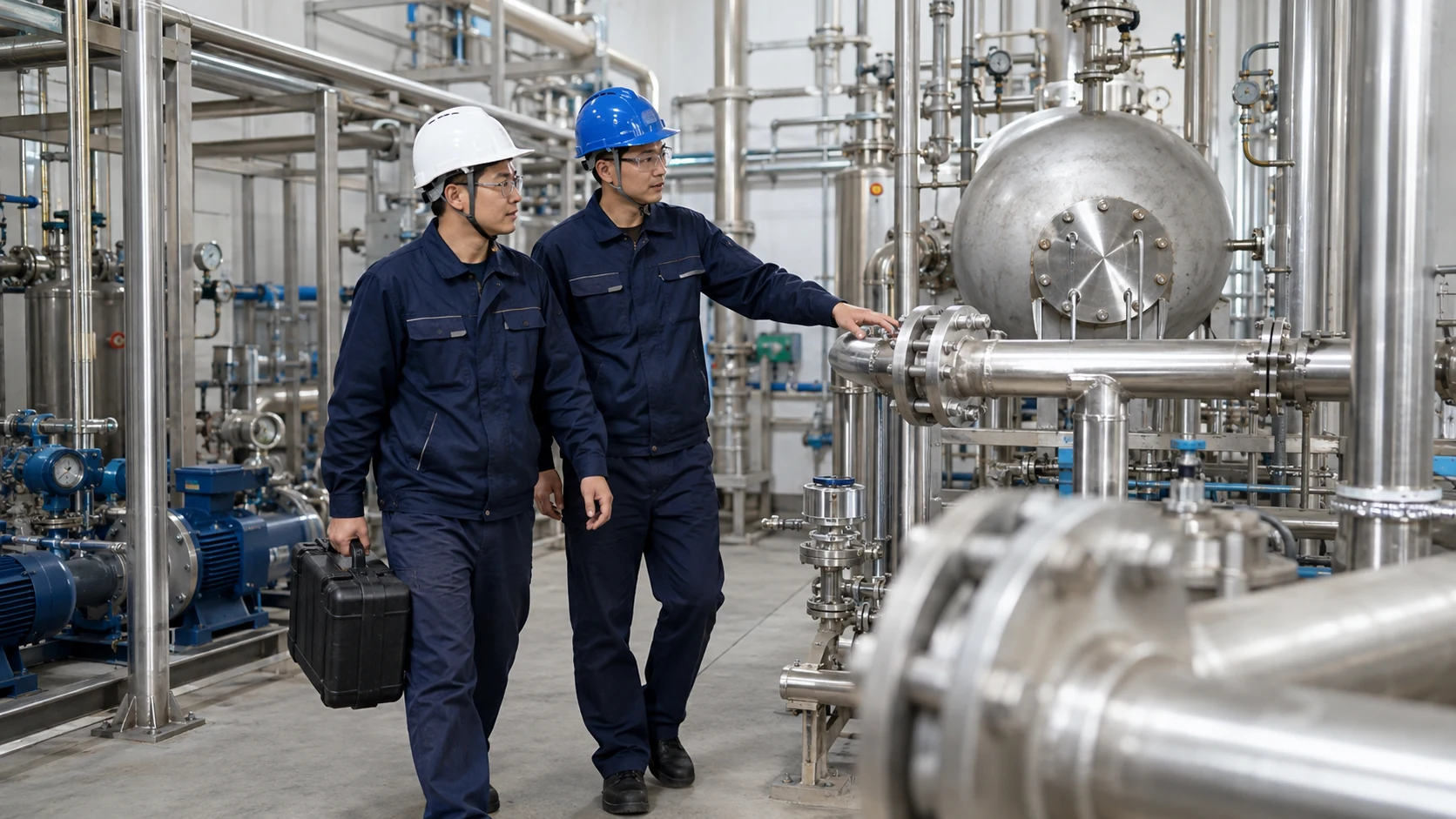
Chengxin technicians discussed the requirements for selecting flange gaskets based on the drawings and gasket samples.
Schematic Illustration of Flange Gasket Selection Discussion
WHY CHENGSHIN

Materials, flange faces, and on-site conditions,
We need to confirm this together to make sure it's accurate.

Chengxin has evolved from simply supplying materials to integrating materials, parts, and engineering requirements. By first examining the medium, temperature, and pressure, and then verifying the gasket geometry, flange surfaces, and bolting conditions, the company systematically narrows down the causes of recurring leaks.

If you already have old parts, drawings, or part numbers, start with the existing information; also make a clear list of what information needs to be added.

WHY CHENGSHIN

6 Major Advantages of Chengxin Flange Gaskets

Each step of verification is designed to ensure that the materials, specifications, and equipment operating conditions are consistent with one another.

01

Identifying the Cause of Recurring Leaks

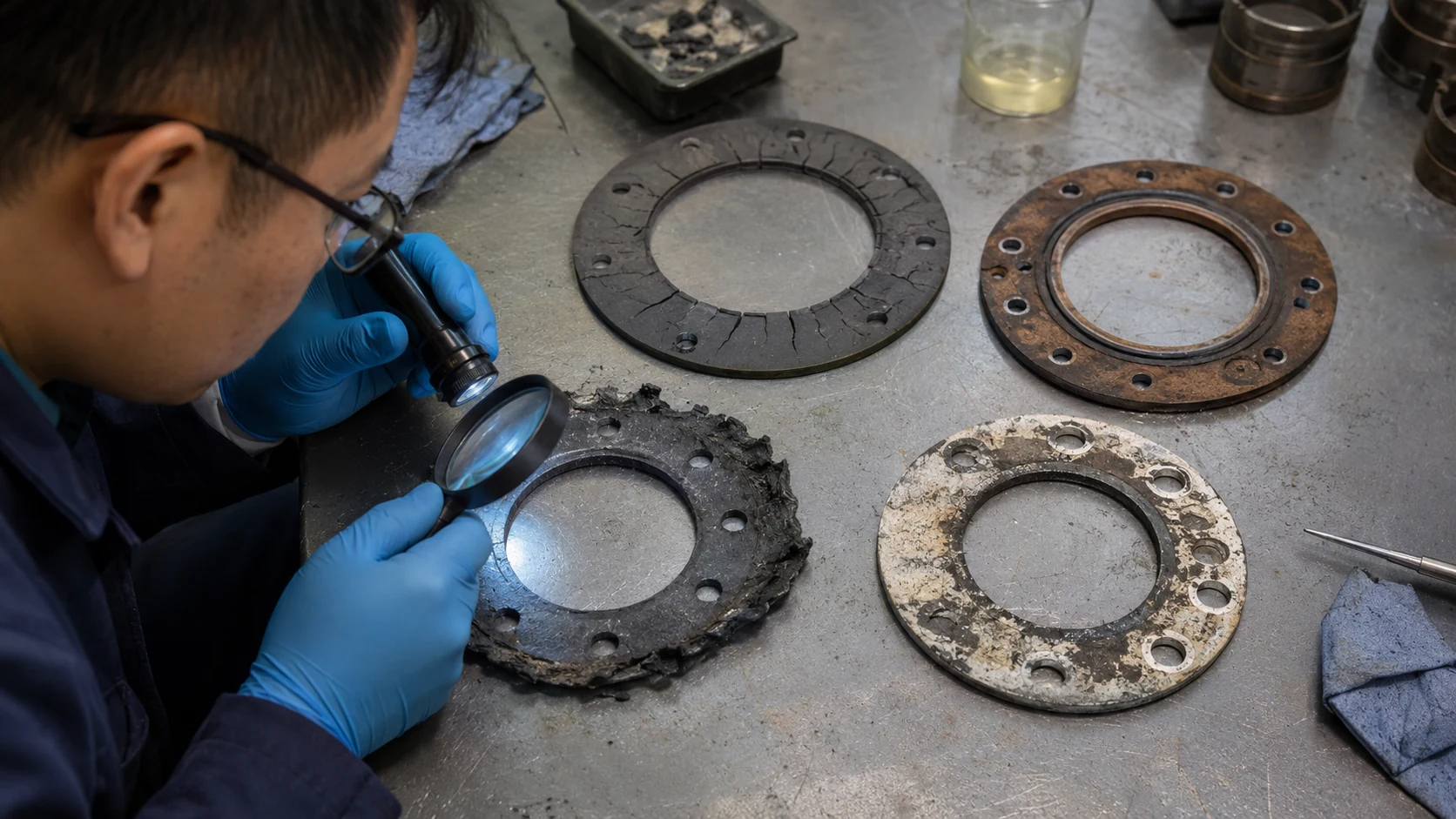
Illustration of Flange Gasket Selection and Inspection

Based on signs of wear on the old parts—such as cracks, misalignment, extrusion, and erosion—and by comparing them with the materials, sealing surfaces, and installation conditions, we will identify the next steps for improvement.
02

Select materials based on operating conditions for greater reliability

Illustration of Flange Gasket Selection and Inspection

Confirm the name of the medium along with its concentration, temperature, pressure, and cleaning conditions to narrow down the list of suitable material candidates.
03

Dimensional Alignment for Smoother Assembly

Illustration of Flange Gasket Selection and Inspection

Verify the inner diameter, outer diameter, thickness, and hole locations; for special shapes, confirm based on existing parts or drawings, and compile the specifications required for quoting and machining.
04

Flange-to-flange mating ensures a more complete seal

Illustration of Flange Gasket Selection and Inspection

Determine the gasket configuration by identifying the type of sealing surface—whether flat, convex, or other—and considering the condition of the contact surfaces.
05

Clearly state the installation requirements to make scheduling maintenance easier.

Illustration of Flange Gasket Selection and Inspection

Include cleaning, centering, and fastening procedures, as well as equipment specifications, in the verification process to provide a reference for replacement operations.

06

Drawings and Material Specifications Make Acceptance Clearer

Illustration of Flange Gasket Selection and Inspection

Verify the dimensions, materials, and documentation requirements as needed, and organize the information required for prototyping, testing, and subsequent supply in advance.
PRODUCT SELECTION

First, check the gasket type,
Next, select materials based on operating conditions

Even if the external dimensions are the same, different materials may be required; first confirm the flange face and dimensions, then consider the medium, temperature, and pressure.

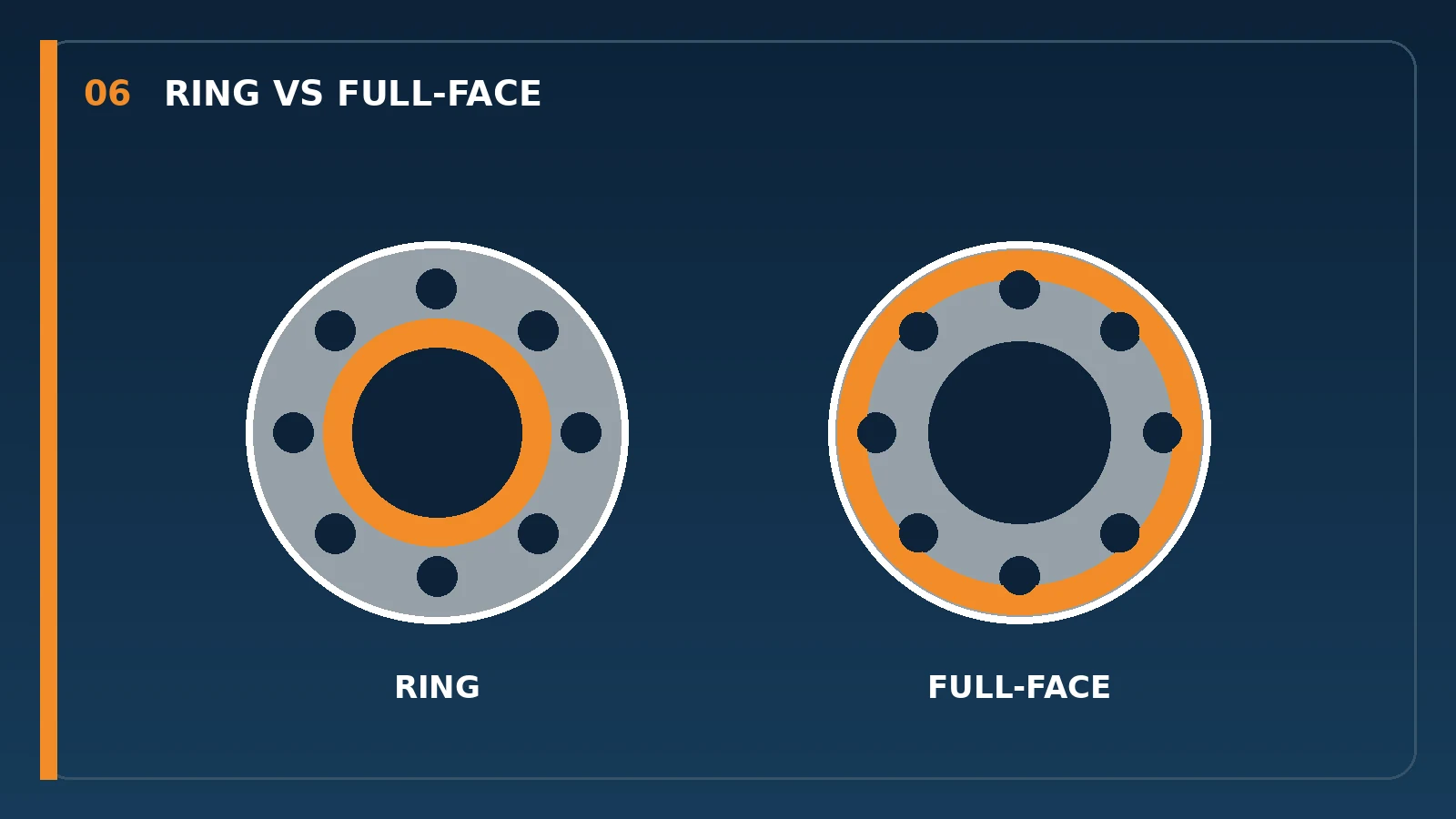
Comparison of the Dimensions of Annular Flange Gaskets and Full-Face Gaskets with Bolt Holes
Application/Product Illustration; actual specifications are subject to the drawings and operating conditions.

Ring-shaped/Flat Gaskets

Determine the overall shape based on the sealing surface area, bolt hole locations, and equipment specifications.

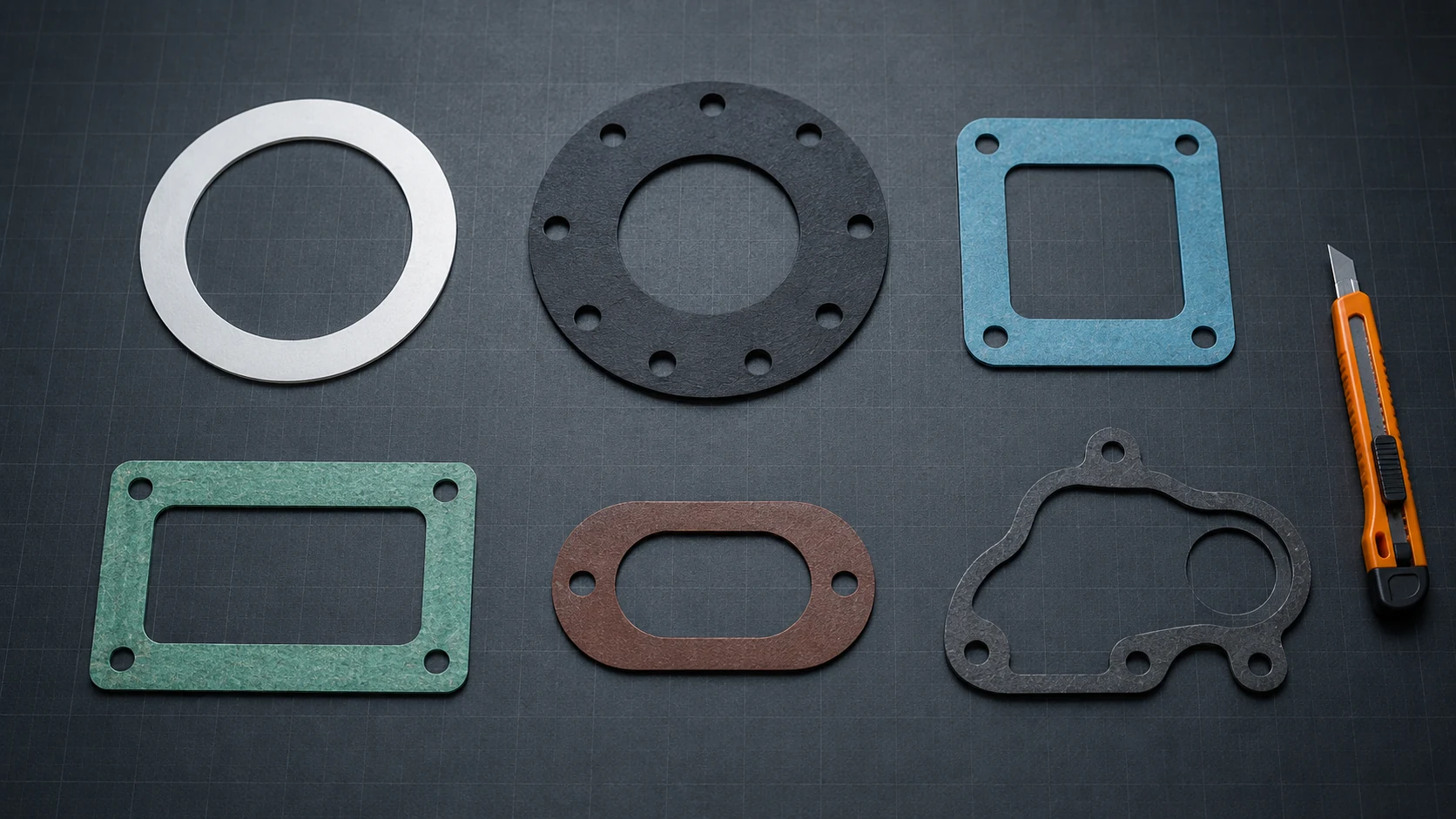
Custom Flange Gaskets for Circular, Fully Flat, Square, Rectangular, Oval, and Irregular-Shaped Holes
Application/Product Illustration; actual specifications are subject to the drawings and operating conditions.

Special Sizes / Custom Gaskets

If the standard dimensions do not fit, start by checking the old parts, measurements, or 2D drawings.

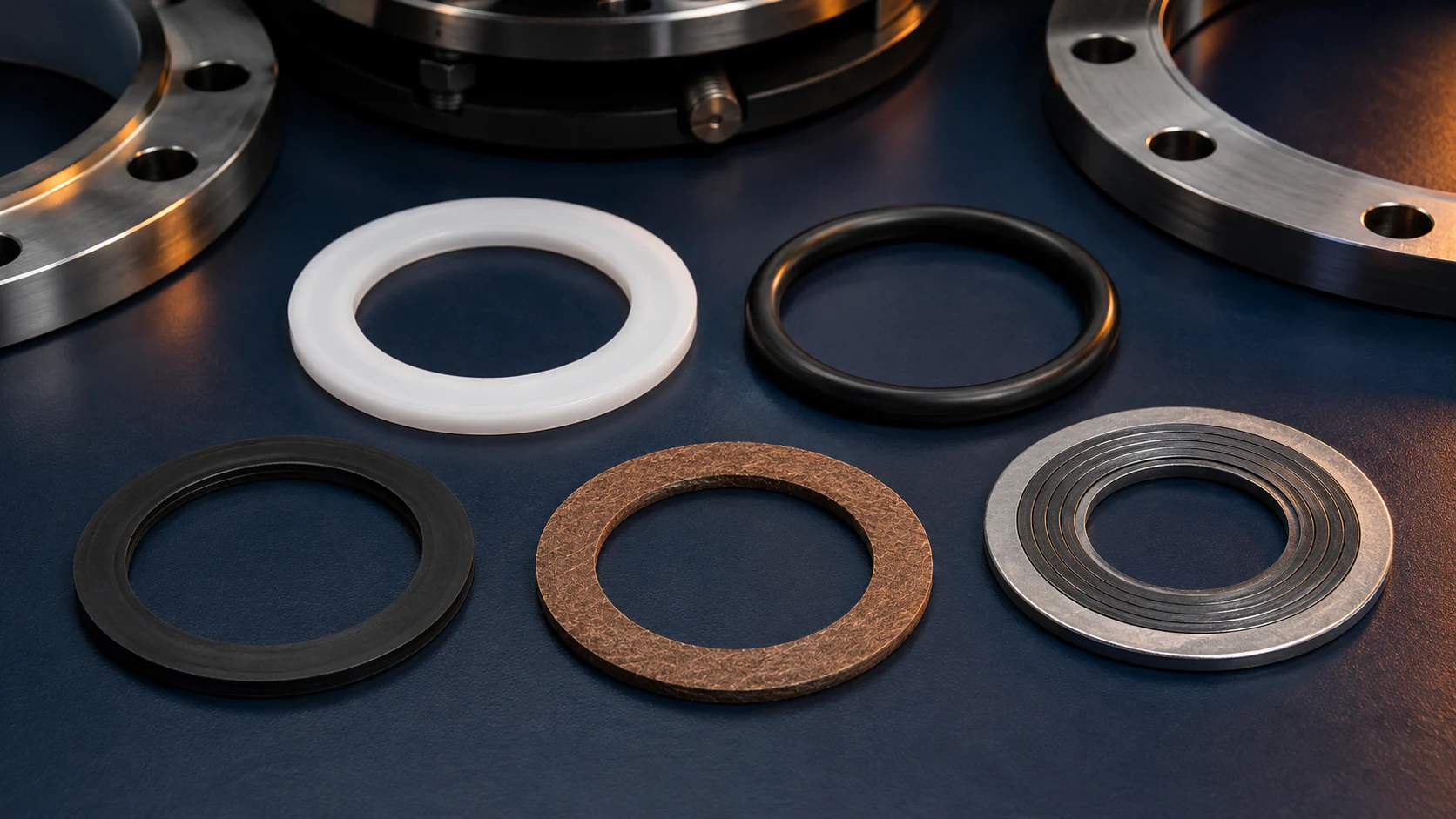
Comparison of Sample Materials for PTFE-Rubber-Fiber and Metal Composite Flange Gaskets
Application/Product Illustration; actual specifications are subject to the drawings and operating conditions.

Materials and Composite Structures

Based on operating conditions, identify potential materials such as PTFE, rubber, fiber, graphite, or metal composites.

Organize all the product selection information at once

Media and Operating Conditions

Illustration of Material Sample Comparison

Media Name/Concentration, Normal and Maximum Temperatures, Pressure, Start/Stop or Cleaning Cycles.

Flange Faces and Dimensions

Schematic of Gasket Measurement and Drawing Verification

Photos or equipment drawings showing the flange type, inner and outer diameters, thickness, hole locations, and sealing surfaces.

Delivery and Verification Requirements

Installation and Final Inspection Diagram

Quantity, intended use, sample testing methods, and any required materials or compliance documents.

Illustration of gasket materials and shapes; actual materials are subject to confirmation in the documentation

PTFE-Type Gaskets

First, confirm the medium and cleaning conditions, then verify the formulation, thickness, and flange face fit.

Illustration of gasket materials and shapes; actual materials are subject to confirmation in the documentation

Rubber Gaskets

Determine the type of seal, the mating dimensions, and replacement requirements based on the medium, temperature, and compression conditions.

Illustration of gasket materials and shapes; actual materials are subject to confirmation in the documentation

Fiber, Graphite, and Metal Composites

Confirm the design based on equipment specifications, temperature and pressure settings, and fastening conditions; compile the prototype and supply specifications.

The image shows a schematic representation of the material and shape; material suitability and temperature/pressure ratings are determined based on the specific grade, gasket structure, and equipment conditions. Please provide the operating conditions so we can narrow down the available specifications.
WHERE IT FAILS

First, assess the site, then determine the appropriate sealing method.

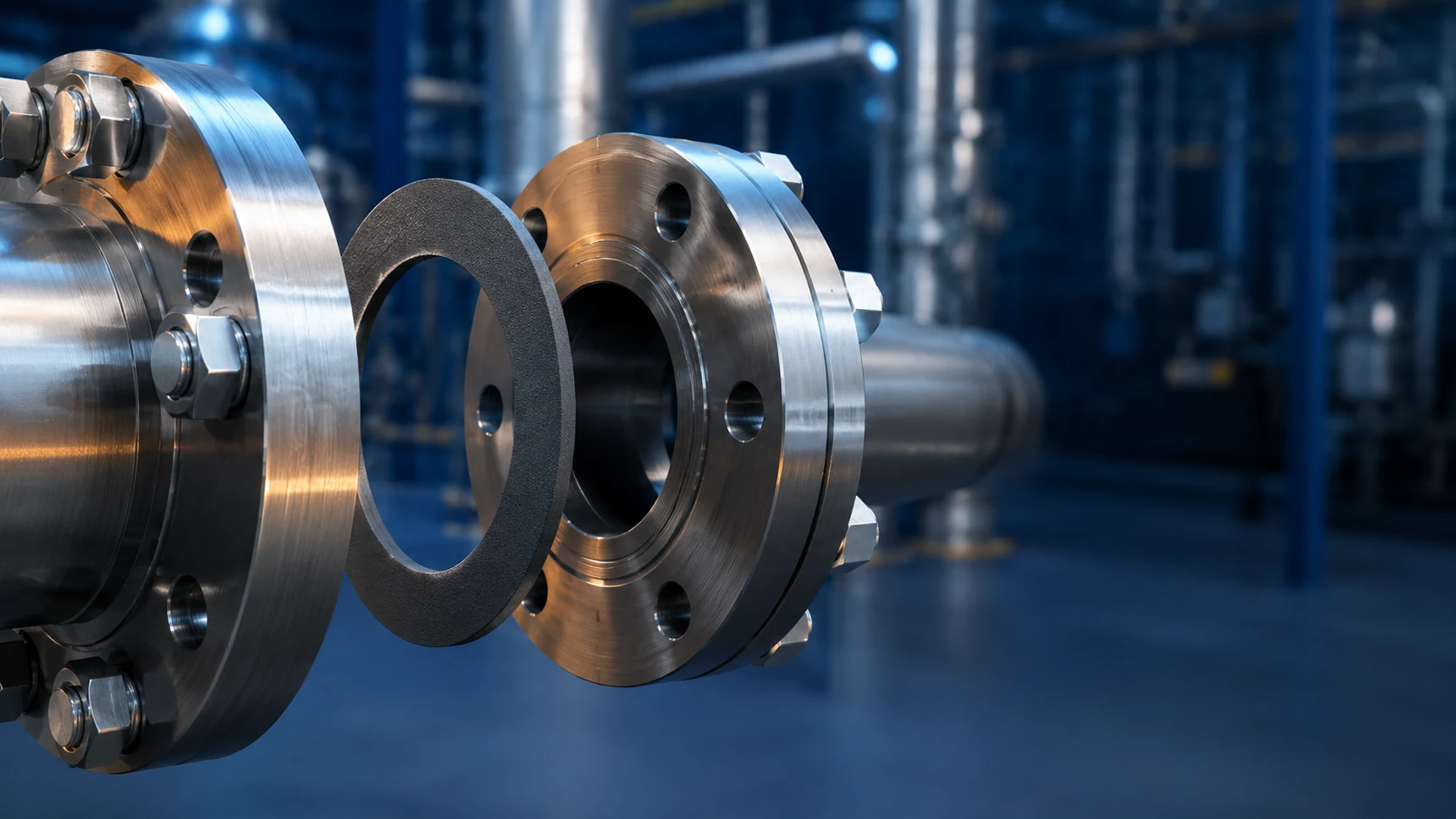
Properly Positioning a Ring-Shaped Flange Gasket Between Two Metal Flanges in an Industrial Pipeline
Application/Product Illustration; actual specifications are subject to the drawings and operating conditions.

Pipes/Valves | Leaks at Joints

First, check the medium, pressure, and the alignment of the flange faces and gaskets; then, review the materials and fastening conditions.

On-site Pipe Sealing for High- and Low-Temperature Cycling Equipment
Application/Product Illustration; actual specifications are subject to the drawings and operating conditions.

Equipment Integration | Changes in Operating Conditions

When process, temperature, or cleaning conditions change, re-verify the specifications of the original gasket and the suitability of the material.

On-site Inspection of Flange Gasket Failure Caused by Corrosion and Cracking
Application/Product Illustration; actual specifications are subject to the drawings and operating conditions.

Old Evidence Is Invalid | Leave Clues for Judgment

Take clear photographs of any cracks, extrusions, erosion, or eccentricities, and provide them along with the disassembly locations and operating conditions.

INCOMING MATERIAL VERIFICATION

The materials and dimensions are based on specific criteria,
Better Delivery, Better Acceptance

Confirm the materials, documentation, dimensions, and appearance based on requirements. If you need a comparison of incoming materials or compliance documentation, first compile a list of the items to be verified, and then confirm what information can be provided.
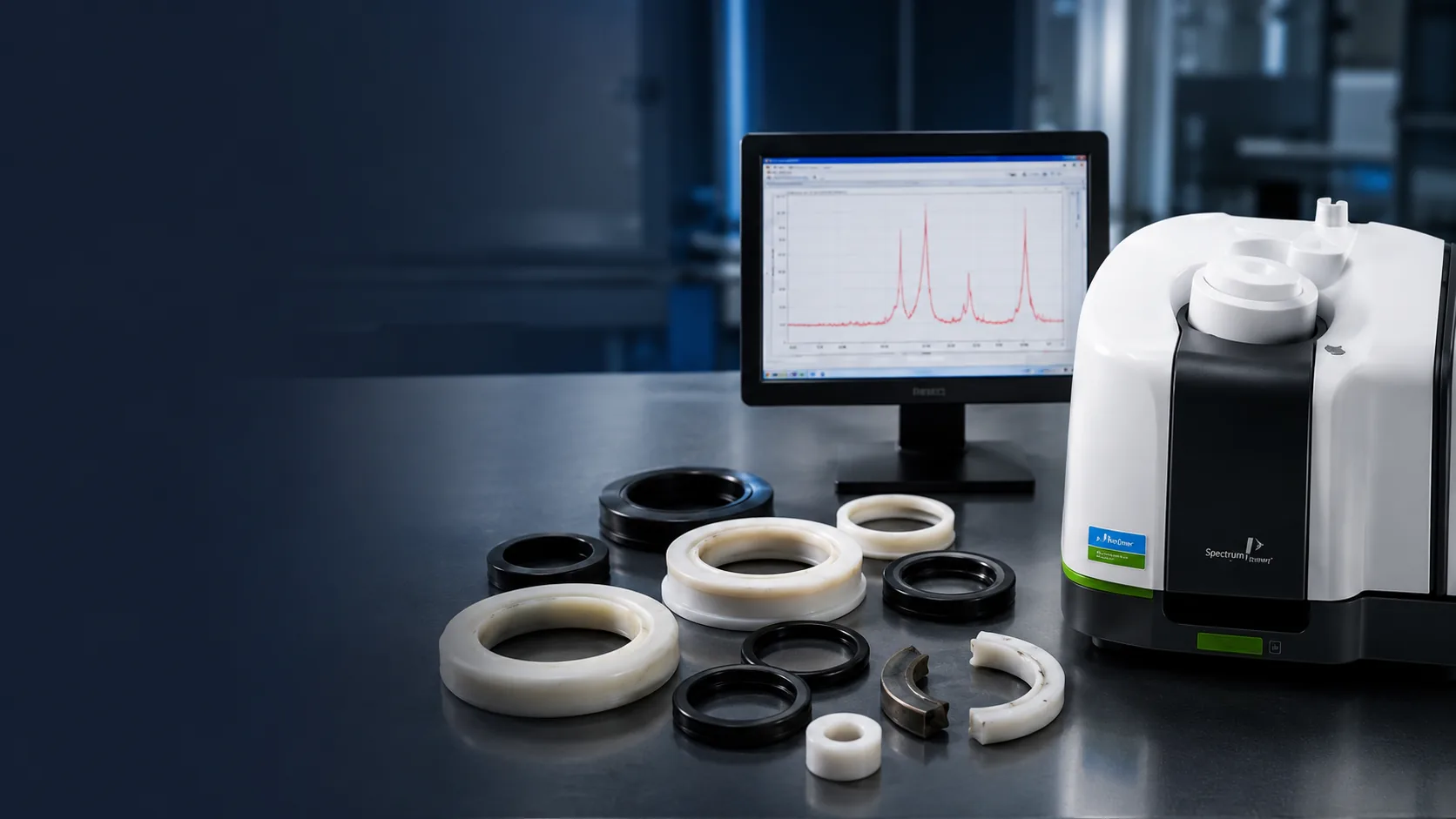
Illustration of FTIR Material Comparison

Material Comparison

Verify material grades, perform FTIR comparisons, and review available material documentation as needed.
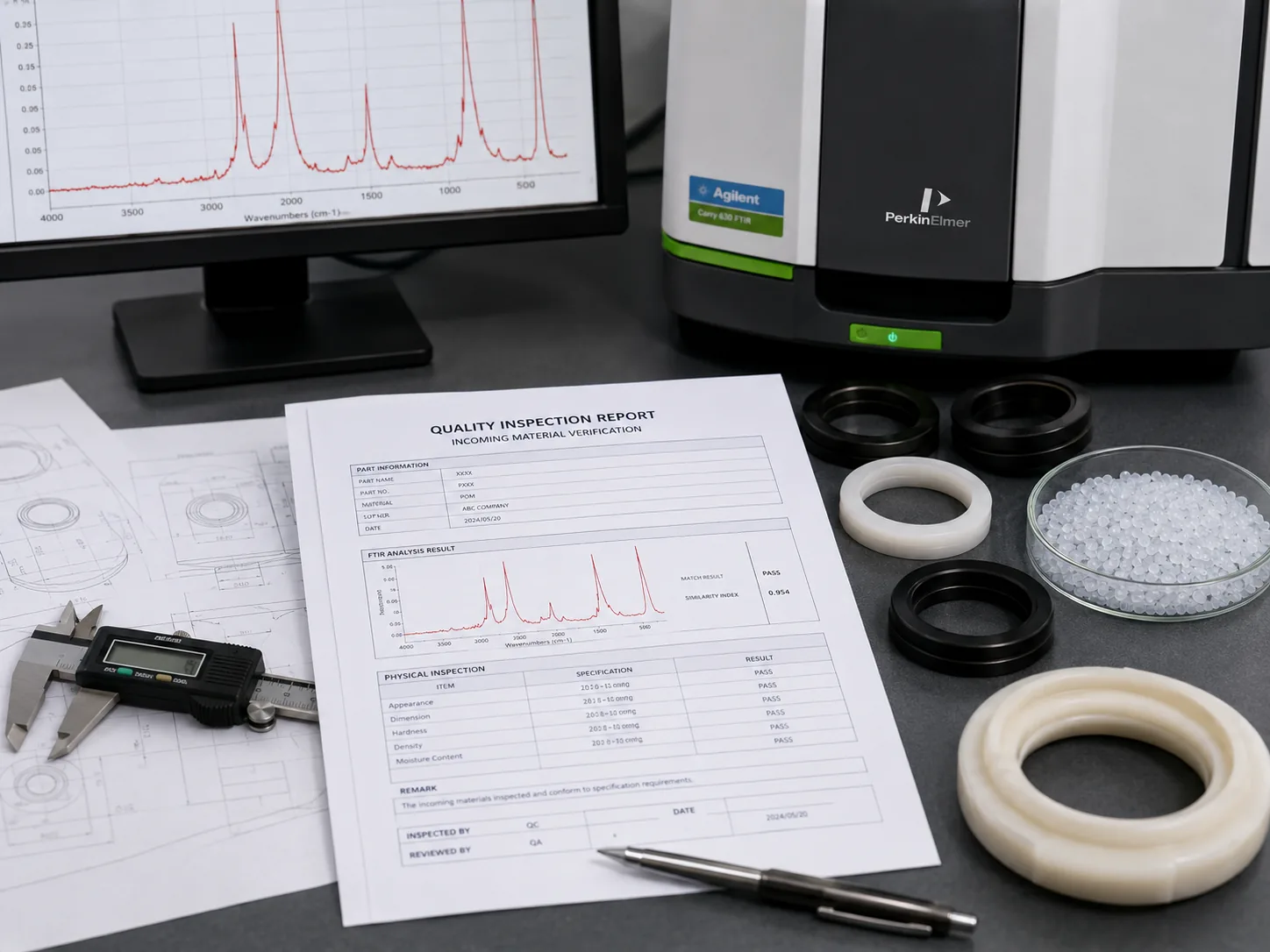
Sample Quality Inspection Document

Document and Specification Review

Organize dimensions, appearance, and documentation items according to the confirmed specifications, and coordinate sample delivery and acceptance.

View the Quality Verification Process →

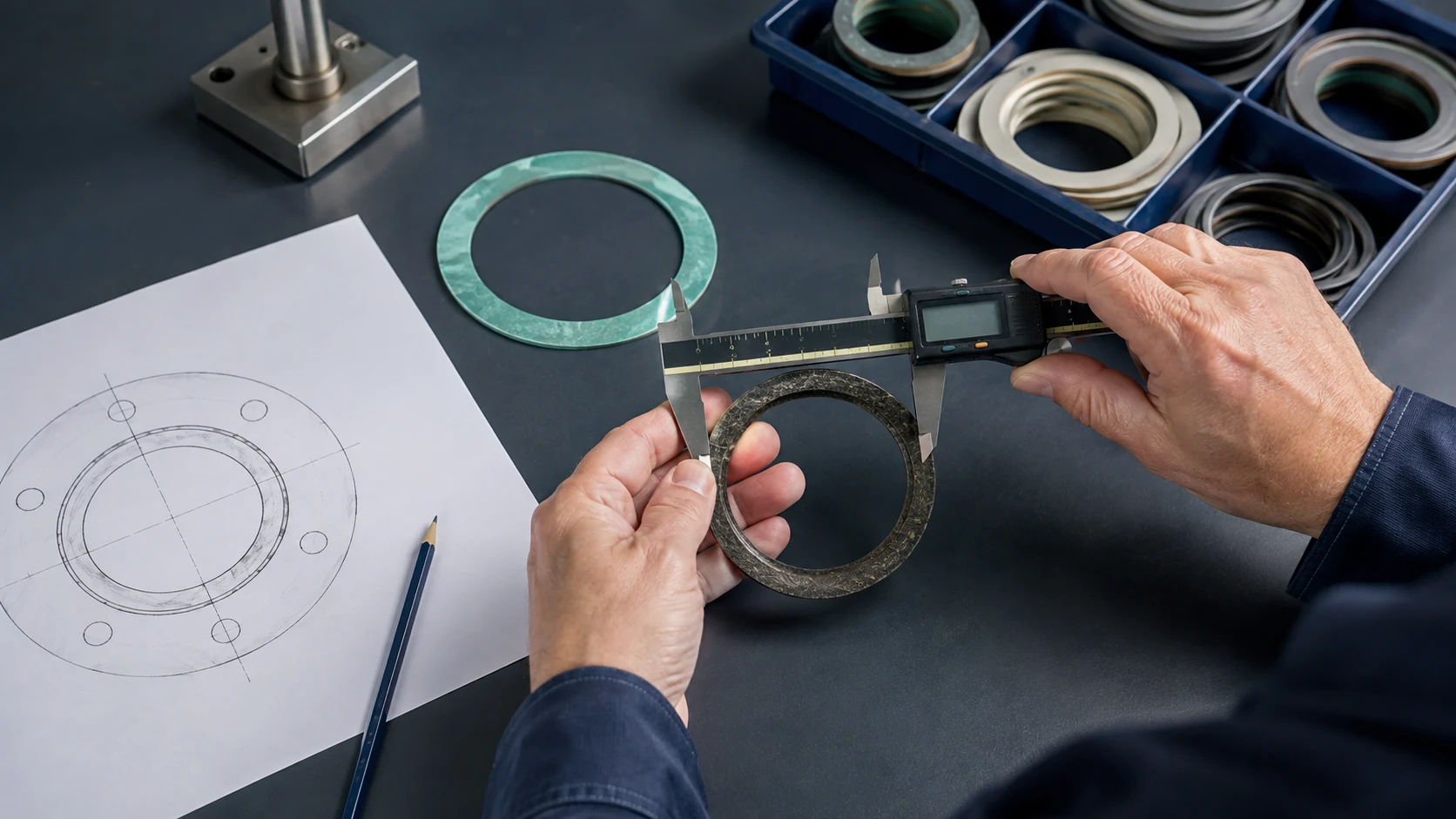
Technicians used a vernier caliper to measure the old flange gasket and cross-referenced it with the 2D drawings.
Application/Product Illustration; actual specifications are subject to the drawings and operating conditions.

Check the drawings against the actual items

The dimensions, hole locations, and thickness of the old parts, along with the drawing version, shall serve as the common basis for machining and acceptance.

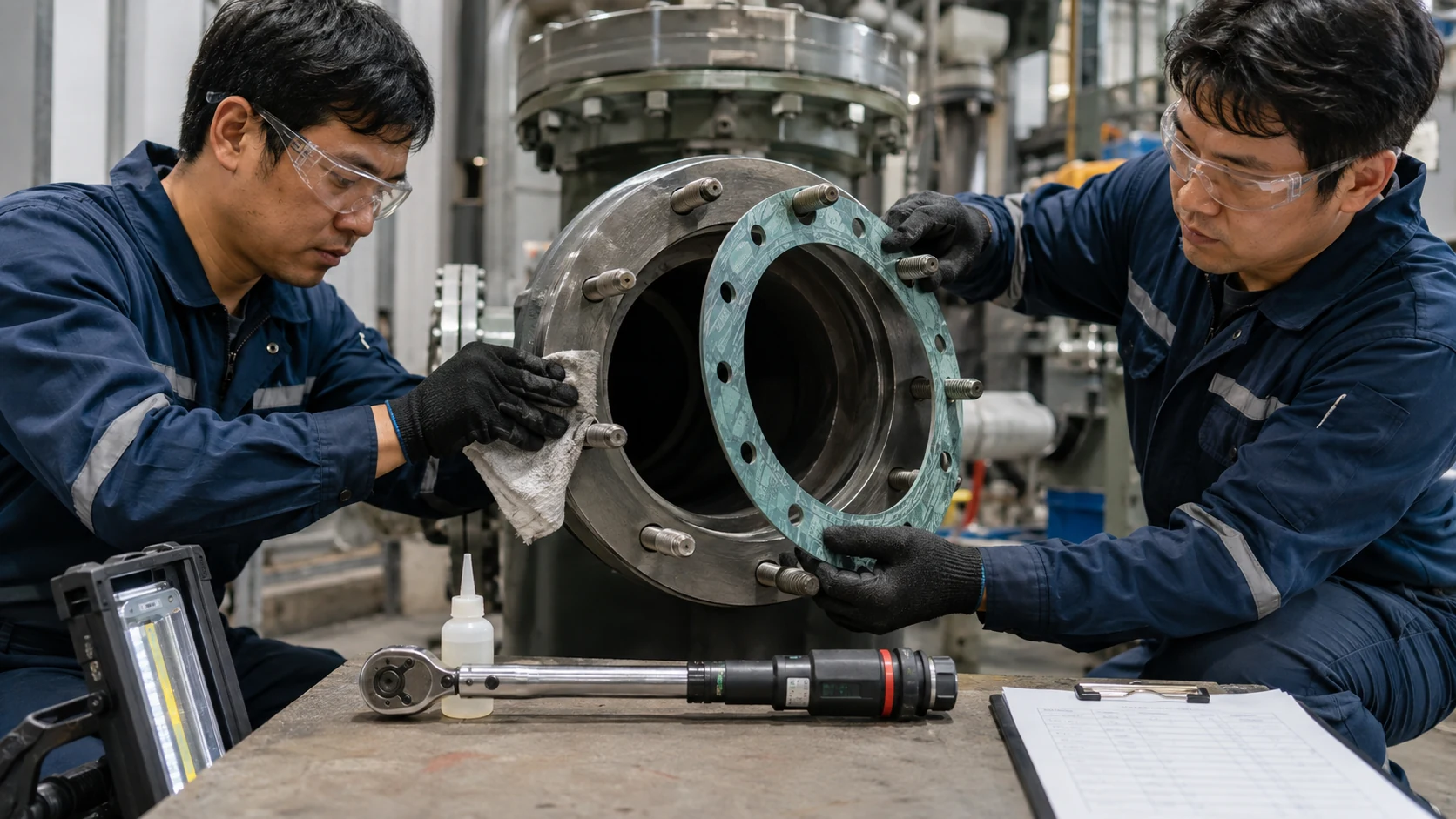
Four Steps for Installing Flange Gaskets: Cleaning, Centering, Segmented Tightening, and Final Inspection
Application/Product Illustration; actual specifications are subject to the drawings and operating conditions.

Confirm the installation and testing conditions together

Verify the fastening and testing procedures in accordance with the original manufacturer’s specifications for the equipment or gaskets, and record the actual performance after replacement.

APPLICATION REVIEW

Organize on-site issues into actionable next steps

Recurring Leaks

Schematic of a Flange Gasket Failure Inspection

Compare the leak location, traces of the old part, and operating conditions to determine whether to start by examining the material, dimensions, or joining conditions.

Process Condition Adjustments

Illustration of Candidate Materials for Flange Gaskets

When the medium or cleaning method changes, re-align the material orientation and then verify it based on the actual equipment configuration.

Customization and Ongoing Supply

Schematic Diagram of a Custom Flange Gasket

Compile processing specifications from existing parts or drawings, and confirm sample production, testing, and subsequent quantity requirements.

SEND IT NOW

Send me the data,
Go directly to the next step

Old gaskets, photos, dimensions, part numbers, or operating conditions—any of these will work. Please send us the information you have first, and Chengxin will help determine what needs to be replaced. We’ll then narrow down the options, provide a quote, or proceed with a prototype.