

Backup Ring | O-Ring Support for High-Pressure Seals
Have you encountered these three situations when working with high-pressure seals?
When all that’s left are worn-out old parts or equipment drawings, how can we determine the material, opening type, and dimensions of the retaining ring?
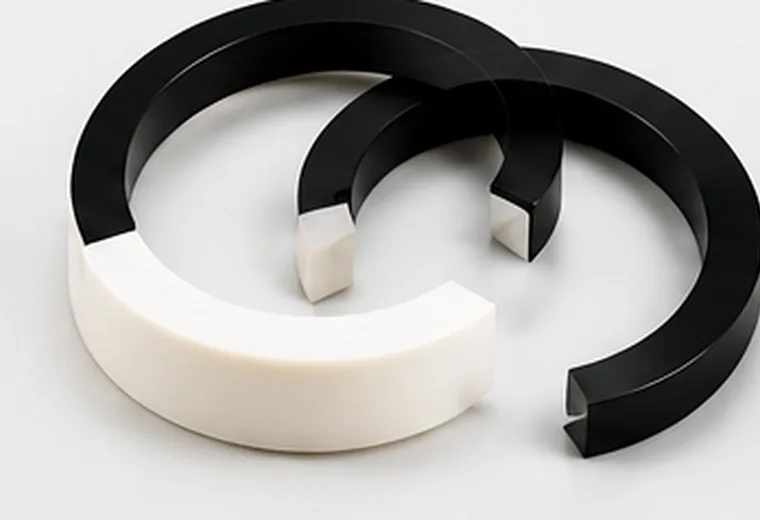
Let Xin Seal King help you
Five Key Points Confirmed with Chengxin’s Assistance
Cheng Xin systematically assessed which side the O-ring would be extruded from, whether the groove could accommodate a retaining ring, the assembly path, and the material specifications. These five steps were used to narrow down the range of types and sizes.
01.
Confirm the extrusion position
Examine the location of damage on the old part, the direction of pressure, and the fit clearance to first determine which side the retaining ring should support.
02.
Check the Grooves and Dimensions
Based on the drawings, the O-ring cross-section, and the groove dimensions, determine the inner and outer diameters, thickness, and installation clearance of the retaining ring.
03.
Evaluation of Retaining Ring Types
Depending on the mounting method, options include full-circle, open-ended, or other processed configurations; the actual selection should be based on the drawings and operating conditions.
04.
Materials and Processing Discussion
Evaluate materials and the feasibility of machining according to drawings based on medium, temperature, pressure, and dimensional requirements.
05.
Confirm Inspection and Documentation Requirements
If you need dimensional inspections, material documentation, or batch information, please include these requests in your inquiry so we can confirm which items we can provide.
Backup Ring Types
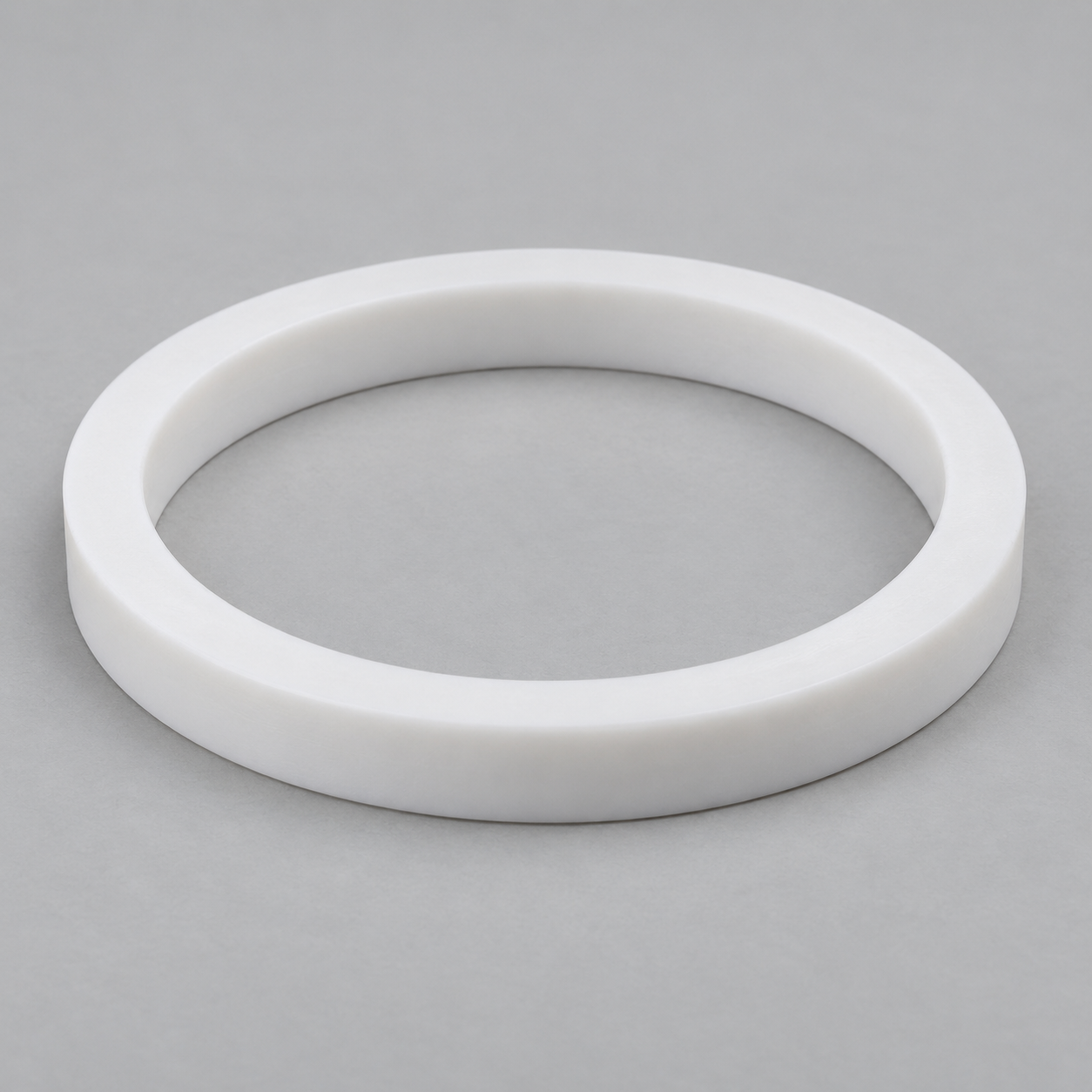
Full-Circle Retaining Ring
AI Type Diagram; actual shape and dimensions are subject to the drawings.
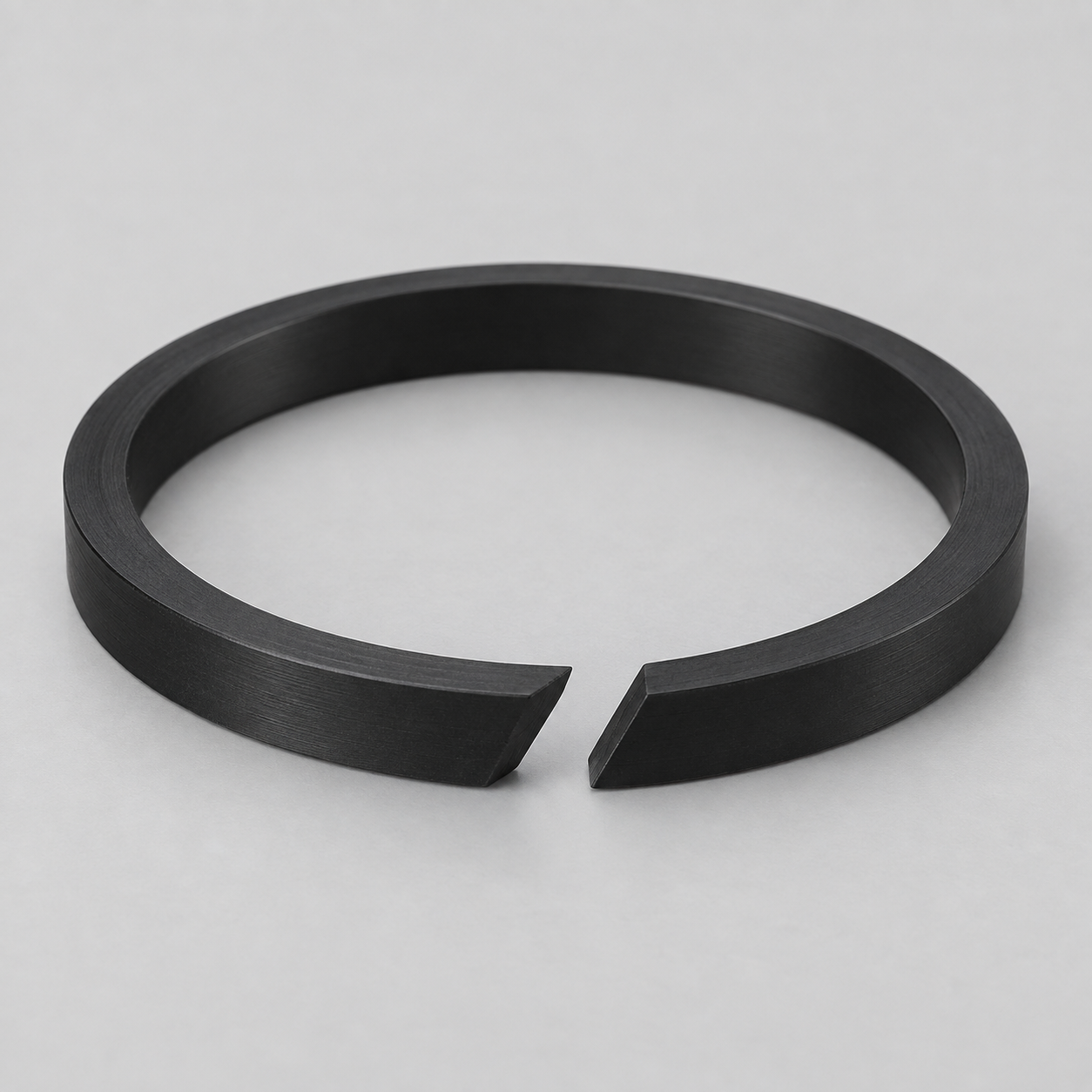
Open-End Retaining Ring
AI Type Diagram; actual shape and dimensions are subject to the drawings.
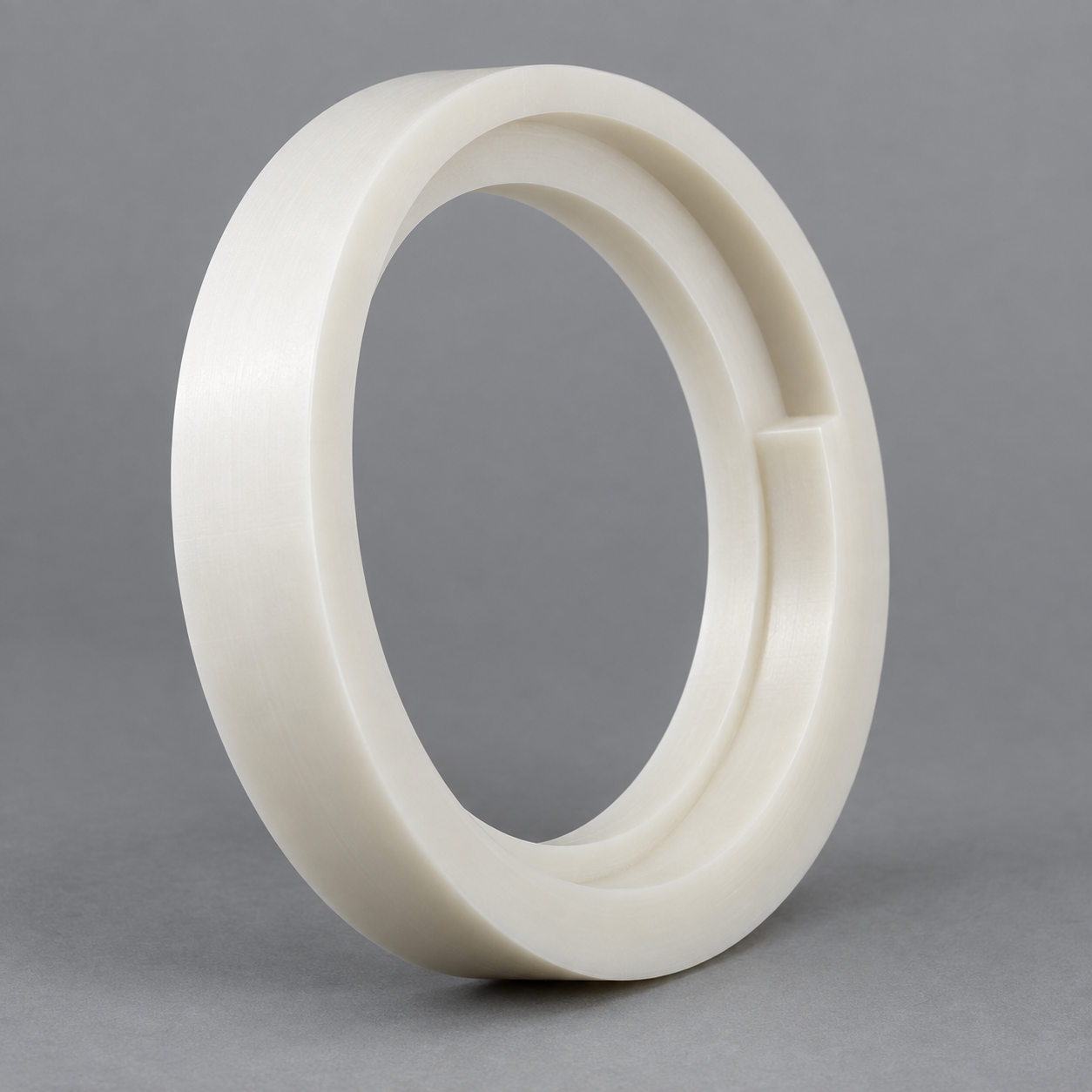
Custom-Made Retaining Rings
AI Type Diagram; actual shape and dimensions are subject to the drawings.
Applications of Retaining Rings and O-Rings
The retaining ring is used to support the O-ring on the side of the sealing gap. Determine whether extrusion has occurred based on the location of the damage, the direction of pressure, and the groove dimensions, and then verify the assembly method. For the following six equipment scenarios, please take photos of the old parts and provide the relevant data.
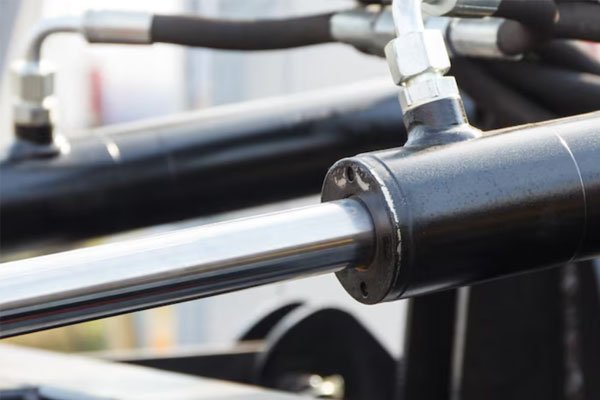
Hydraulic and Pneumatic Systems
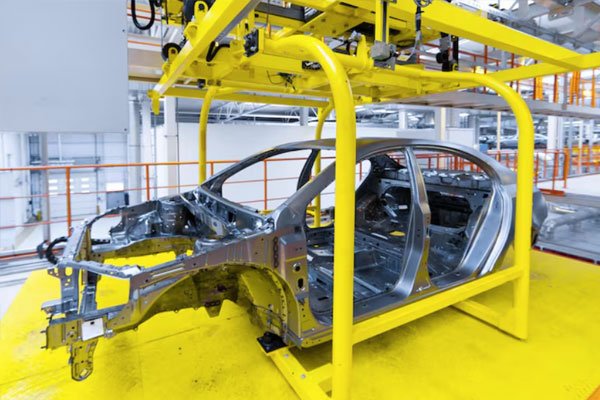
Automotive and Transportation Industry

Semiconductor and Electronics Industry

Food and Pharmaceutical Industries
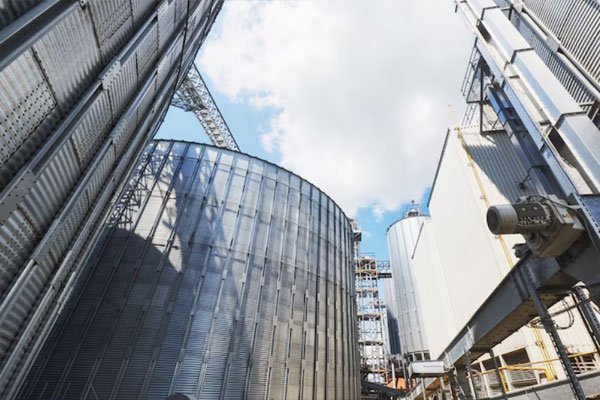
Petrochemical and Chemical Industries

Water Treatment and Environmental Engineering
How to Choose the Right Material for Retaining Rings
The material for the retaining ring must be evaluated in conjunction with the O-ring, pressure, clearance, medium, and temperature. The following lists potential engineering materials for consideration; specific grades, filler formulations, dimensions, and availability will be confirmed based on the drawings and operating conditions.
PTFE / Filled PTFE
Common material orientations for retaining rings. Filler formulations can be discussed based on pressure, wear, and medium conditions, and assembly methods and dimensions should be verified.
PEEK
Consider this option when higher rigidity and dimensional stability are required; actual applicability must be verified based on the medium, temperature, and clearance.
PCTFE
Although evaluation can be based on low-osmolarity and size criteria, operating conditions and supply specifications must still be verified.
PVDF
Material selection should be based on an evaluation of media compatibility and processing dimensions, and must be tailored to the actual temperature, pressure, and stress conditions.
PI and other engineering plastics
For special temperature or dimensional requirements, other engineering plastics may be considered; specific grades and processability will be determined on a case-by-case basis.
Material Grade and Supply Confirmation
For PTFE-filled formulations and other engineering plastics, compare the available grades, machinable dimensions, and assembly methods to confirm the deliverable specifications.
Please forward these three items; Cheng Xin will make an initial assessment first.
You can get started with photos of the old part; drawings and operating conditions can be added as more information becomes available. Cheng Xin should first mark the dimensions that need to be confirmed and the direction of the load.
① Used parts and photos: Take photos of the O-rings, retaining rings, and grooves, and mark the locations of any damage or extrusion.
② Drawings and Dimensions: Indicate the cross-section of the O-ring, the inner and outer diameters of the groove, the depth, and the fit clearance; provide known values first.
③ Operating Conditions: Specify pressure and direction, medium, temperature, whether for reciprocating or static use, and the required quantity.
After sending the data, what will Chengxin reply?
01Preliminary Data Analysis
Response regarding the side of the damage as initially assessed, as well as the photos and dimensions that still need to be confirmed
02Specification Verification
List the specifications for O-rings, grooves, and the compression direction that still need to be verified
03Manufacturing and Delivery Times
Once the specifications and quantities are finalized, we will respond with information on supply or processing feasibility, a quote, and delivery times.
04Assembly Discussion
Identify the space and orientation to be considered for full-circle or open-ended assemblies
05Delivery Confirmation
Confirm the items available for size verification and material documentation upon order confirmation
Send photos of the old parts to receive a list of dimensions to be replaced
Start by reviewing photos of the old part to determine the required dimensions and discuss possible designs; once all specifications are finalized, confirm the quote and delivery date.