

From a single PVDF rod to parts ready for direct machine use—one-stop service to help you achieve mass production
Corrosion-resistant, high-purity, and mechanically strong. From material specifications and drawing-based machining to prototyping and mass production, Chengxin handles it all for you.

It’s not enough to just be able to buy PVDF; these three things are usually what really get in the way.

Choosing the right materials is just the first step; Chengxin takes care of everything that follows—processing, prototyping, and validation.
Material Verification → Specification Selection → Drawing/Existing Part Evaluation → Manufacturing Process → Prototyping → Quality Verification → Mass Production → Long-Term Supply
You can either purchase just the materials or provide drawings, dimensions, old parts, or equipment specifications. When dealing with corrosion, leaks, fluid transport, or special operating conditions, simply select the corresponding solution.
Strong acid and alkali resistance, high purity, and no compromise on strength—that’s where PVDF comes in.
The advantage of PVDF is not simply its “corrosion resistance,” but rather the balance it strikes between chemical resistance, mechanical strength, cleanliness, weather resistance, and processability.
Suitable for environments containing acids, alkalis, chemical solutions, and various corrosive media.
Refer to the operating temperature range; actual conditions should be confirmed based on the medium, pressure, and grade.
More suitable for valve bodies, support components, and structural parts.
Contains no additives and is suitable for semiconductor and high-cleanliness environments.
It offers excellent weather resistance and dimensional stability, making it suitable for long-term equipment use.

Anyone can give you a quote for PVDF, but what really sets us apart is whether we can actually help you get the job done—and do it right.
It’s not difficult to source PVDF raw materials; what really affects the project is the subsequent processing, prototyping, sizing, and verification of the material to determine whether the project can move forward.
We don't just work with common plastics such as PP, PE, and ABS; we are also familiar with the flow, shrinkage, and molding windows of PVDF.
After purchasing rods, sheets, and tubes, they can be directly processed using machining, injection molding, compression molding, and composite manufacturing methods.
2D/3D drawings, dimensions, tolerances, and quantities can be used directly to determine construction methods and prepare quotes.
Repair parts and replacement parts can be identified based on photos, old parts, partial dimensions, and the equipment's intended use.
During R&D, we first produce small batches to verify dimensions and assembly, and then proceed to subsequent mass production.
Verify information regarding COA, REACH, RoHS, FDA, PFAS/PFOS, etc., based on the manufacturer and batch.

Bars, plates, tubes, and semi-finished products—whatever materials you need, we’ll put the right specifications together for you.
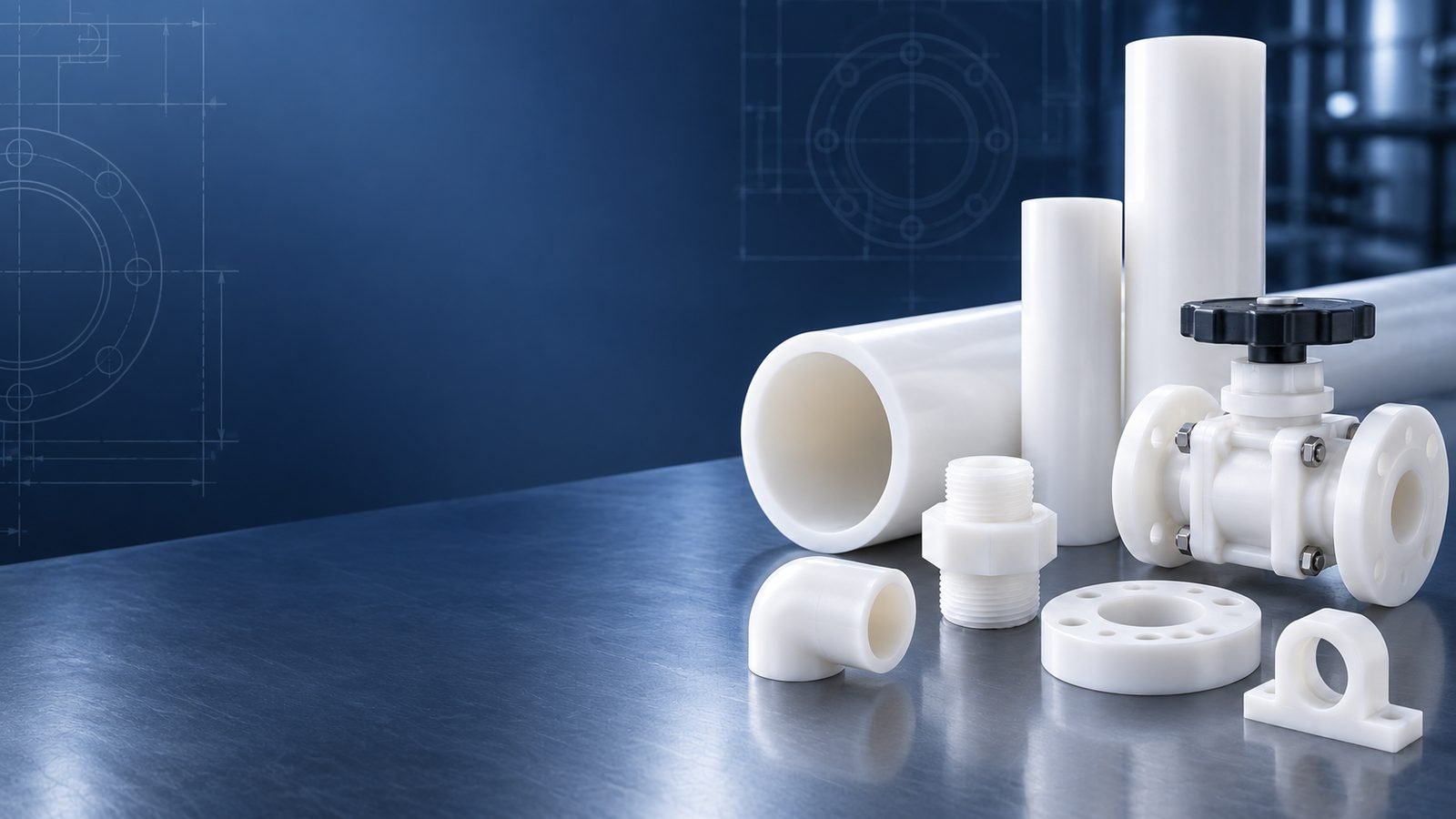
PVDF Rods
Suitable for turning, milling, drilling, and various types of precision machining.
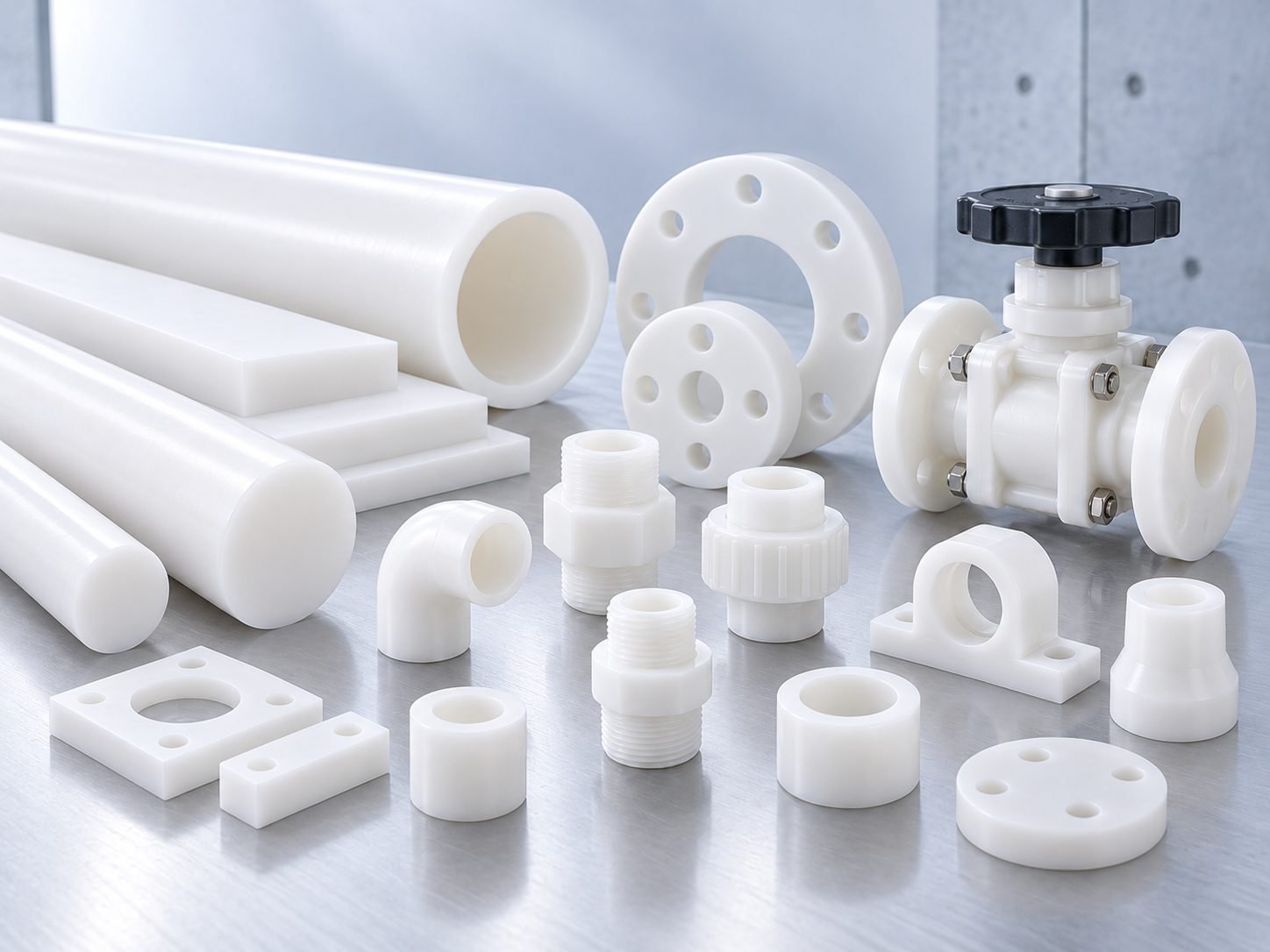
PVDF Sheets
Thickness: 3–50 mm; maximum sheet size: approximately 1,500 × 3,000 mm.
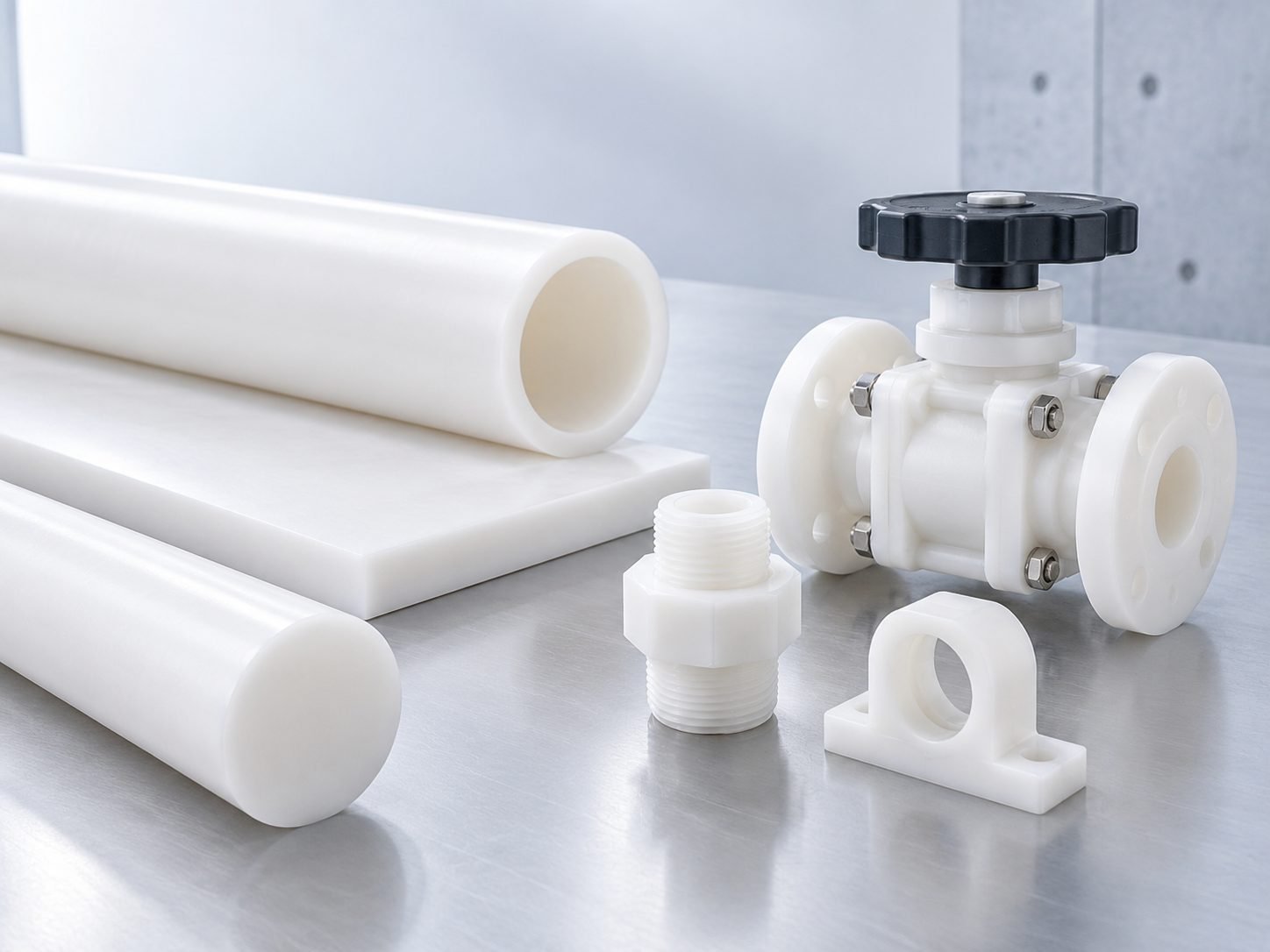
PVDF Pipes
Pipe diameters range from approximately 20–315 mm+, making them suitable for chemical fluids and equipment piping.
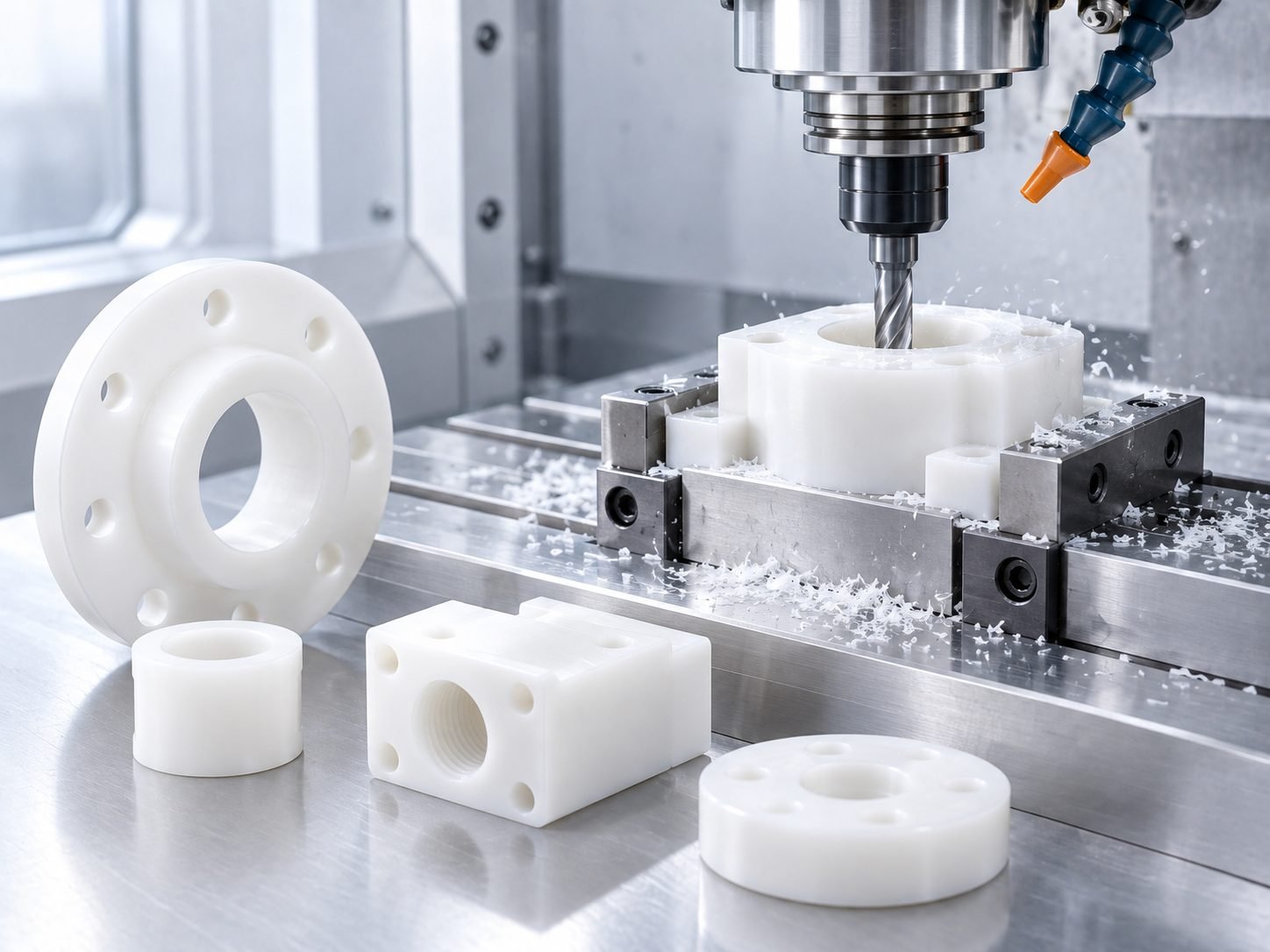
Formed Products / Semi-Finished Products
Injection molding, compression molding, machining, or a combination of these methods can be evaluated based on part requirements.
Buying the materials is just the beginning; these PVDF parts can be turned directly into finished products.
PVDF Valve Body
For use in chemical fluid control and in equipment subject to high corrosion or requiring high cleanliness.
PVDF Valve Seats/Valve Components
Combines chemical resistance, dimensional accuracy, and a sealing design.
PVDF Fittings
Manufactured according to thread specifications, bore diameter, pipe diameter, and equipment configuration.
PVDF Pipe Fittings and Accessories
Used for fluid conveyance, equipment connections, and pipeline configuration.
Diaphragm Holder/Support
Commonly found in pumps, valves, and equipment used in corrosive environments.
Special Structural Components
A standard name is not required; please provide drawings, samples, or old parts for evaluation.
Where is your PVDF used? First, choose the application, then find the right solution.
Once the materials have been confirmed, the real challenge is addressing the operating conditions. This section is only meant to help you figure out the next step—it doesn’t cram every possible solution into the materials page.


It's not just about looking at the bill of materials—these PVDF components have actually been installed in the equipment.

Chemical Solution System | Metal Components Replaced with PVDF
To address the issue of metal corrosion caused by chemical media, we will reassess the media, materials, structures, and manufacturing processes.

Semiconductor Process Water Piping | Development of High-Purity Fittings
Since high cleanliness, chemical resistance, and stability during critical processes are all required, both material and processing quality must be verified together.
It's not enough to get the dimensions right—you also need to verify that the materials are correct.
When replacing old parts, performing repairs, or switching suppliers, the fact that items look similar does not mean they are made of the same materials. Chengxin has incorporated material identification, incoming inspection, and material documentation into its quality control processes.
- COA / Certificate of Analysis
- REACH/RoHS
- FDA-Related Information
- PFAS/PFOS Information
- Third-Party Testing Data

From a single drawing to consistent delivery: Follow these 5 steps for your PVDF project
Requirement Communication
Medium, temperature, pressure, drawings, old parts, dimensions, quantity.
Materials and Design Evaluation
Determine whether PVDF is suitable, as well as its material form and processing direction.
Quotation and Project Confirmation
To be confirmed based on dimensions, construction methods, quantities, and documentation requirements.
Testing and Mass Production Rollout
If necessary, create a prototype first to verify the dimensions, assembly, and operating conditions.
Long-term technical support
Subsequent batches, replacement parts, and ongoing supply can continue to be coordinated.
Do you have specifications, drawings, photos, or old parts? Send them to Chengxin so we can figure out the right direction first.
You don’t need to organize all the data first. Just send us the information you currently have—such as the medium, temperature, dimensions, quantity, or details of the old part—and we can begin assessing the material and processing approach.
The Most Common Issues in PVDF Procurement: Let’s Clear Them Up Once and for All
I'm not sure if PVDF is absolutely necessary. Can I ask first?
Sure. Please first provide the equipment's application, the medium, the temperature, and the materials currently in use, and then we'll determine whether PVDF is suitable.
Is it okay to just buy PVDF material?
Sure. Just provide the dimensions and quantities of the rods, plates, and tubes, and we’ll confirm them first.
If I have drawings, can I have the parts machined directly?
We can provide an initial assessment. Simply provide the drawings, dimensions, tolerances, and quantities.
What if there are no drawings, just the old parts?
You can start with old items, photos, and your current measurements.
What kinds of parts can be made from PVDF?
Current machining applications include valve bodies, fittings, pipe fittings, diaphragm seats, support components, and structural parts.
The equipment is corroded or leaking—is replacing it with PVDF sufficient?
In this situation, we need to examine the Solution layer and verify the medium, temperature, pressure, structure, and actual failure location.